

 All Episodes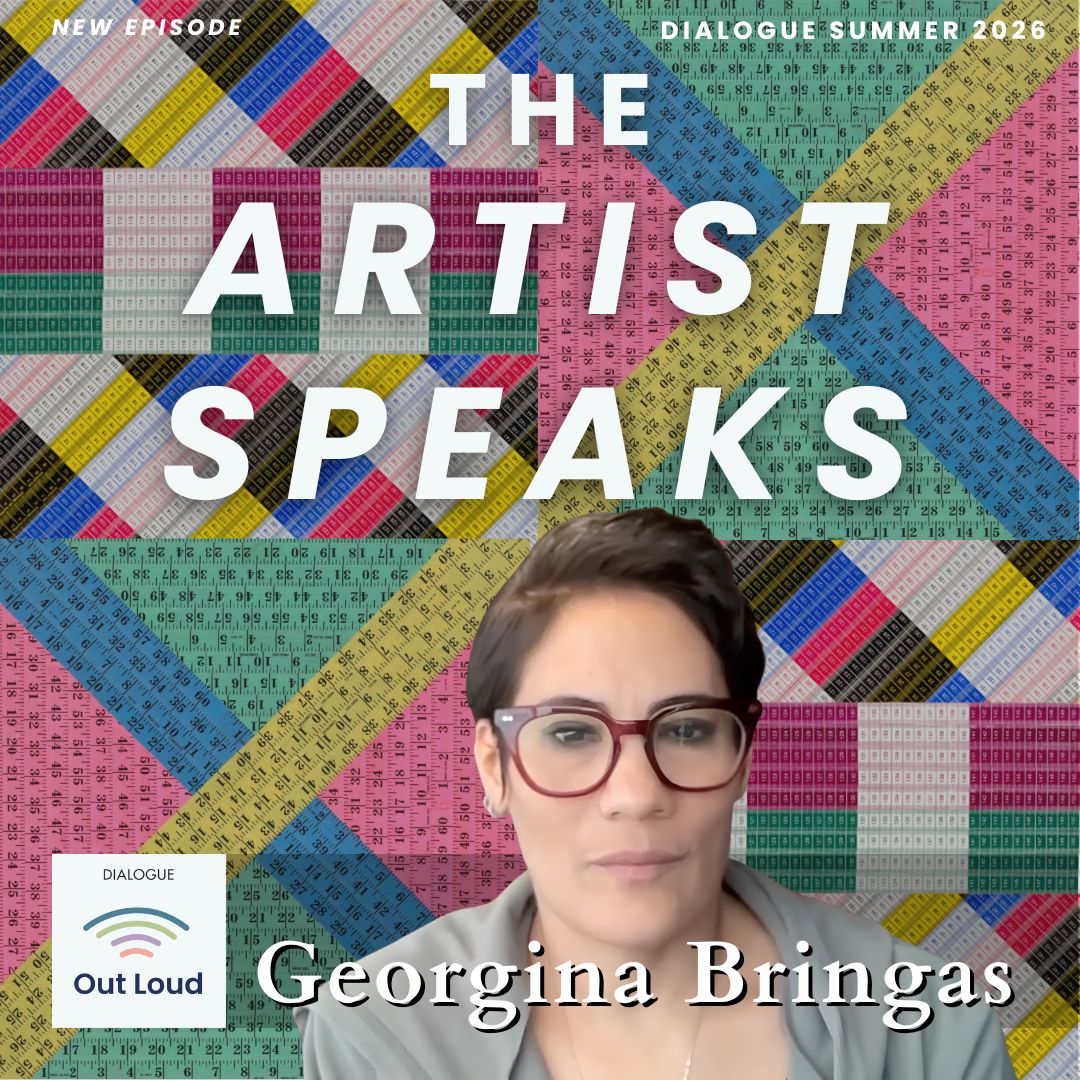
**Please note:** This episode is presented **entirely in Spanish**. If you would like to watch the interview with **English subtitles**, visit the *Dialogue Journal YouTube channel.*
Welcome to the first episode of **The Artist Speaks**, a new series from *Dialogue Out Loud* featuring conversations with the artists whose work appears in *Dialogue: A Journal of Mormon Thought*.
In this inaugural episode, Mexican visual artist **Georgina Bringas**, whose artwork *Composición Métrica III* appears on the cover of the Summer 2026 issue of *Dialogue*, reflects on more than twenty-five years of artistic practice. She discusses her ongoing exploration of space, time, distance, and measurement, explaining how materials such as measuring tape, thread, clocks, and other everyday objects become tools for contemplating the human experience.
Bringas also offers a thoughtful meditation on the relationship between art and faith. Rather than creating explicitly religious imagery, she describes herself as an artist whose spiritual life shapes the way she creates—embracing uncertainty, contemplation, and the quiet act of “walking without complete clarity.”
Whether you’re an artist, a person of faith, or simply curious about the creative process, this conversation offers a rich exploration of how art can become a practice of attention, perception, and hope.
—
**Nota:** Este episodio se presenta **completamente en español**. Si desea ver la entrevista con **subtítulos en inglés**, visite el canal de YouTube de *Dialogue Journal.*
Bienvenidos al primer episodio de **La Artista Habla (The Artist Speaks)**, una nueva serie de *Dialogue Out Loud* dedicada a presentar conversaciones con los artistas cuya obra aparece en *Dialogue: A Journal of Mormon Thought*.
En este episodio inaugural, la artista visual mexicana **Georgina Bringas**, cuya obra *Composición Métrica III* aparece en la portada de la edición de verano de 2026 de *Dialogue*, reflexiona sobre más de veinticinco años de práctica artística. Habla de su exploración del espacio, el tiempo, la distancia y las medidas, y de cómo materiales como la cinta métrica, el hilo, los relojes y otros objetos cotidianos se convierten en herramientas para contemplar la experiencia humana.
Bringas también comparte una profunda reflexión sobre la relación entre el arte y la fe. En lugar de crear imágenes explícitamente religiosas, se describe como una artista cuya vida espiritual influye en su manera de crear, abrazando la incertidumbre, la contemplación y el acto silencioso de **”caminar sin tener una claridad completa.”**
Ya sea que usted sea artista, una persona de fe o simplemente sienta curiosidad por el proceso creativo, esta conversación ofrece una rica exploración de cómo el arte puede convertirse en una práctica de atención, percepción y esperanza.