Artists

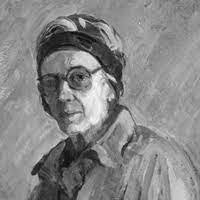
Ella Smyth Peacock

Ella Gillmer Smyth Peacock is known for painting old buildings and landscapes in Sanpete County, Utah where she lived for nearly thirty years.  A regional impressionist who painted in a 1920s signature style in the late 20th century, Peacock lived in a small artists’ community in Spring City, Utah.

Peacock was born in Philadelphia, Pennsylvania to George Albert Smyth and Adelaide Short Munhall Smyth.  She was educated at the private Germantown Friends School and High School through her sophomore year and later attended the public Germantown High School.

After enrolling in the Peabody Conservatory to study music, Peacock changed her mind and enrolled in the Maryland Institute College of Art for one semester.  Gillmer, as she called herself from 1924 to 1970, enrolled in the Philadelphia School of Design for Women-now called the Moore College of Art-on a scholarship.  Gillmer was awarded her degree in Illustration and received the Sam Murray Sculpture Prize from the Philadelphia School of Design for Women.  She was most influenced by instructors Sam Murray, George Harding, and Paula Balano.

Peacock supported herself throughout the Depression in a variety of design-related work, focusing on the decorative arts.  She made and burnished frames with gold leaf; she painted flowers on lampshades; drew designs for new settings for antique jewelry; she collected and sold antique furniture; she designed and built “themed” recreation rooms and remodeled and decorated apartments, the latter with her good friend Frances (Monty) Montgomery.  Peacock drove across the country to see the West at least three times on road trips with women friends and once with her mother, camping and painting the land of New Mexico, Arizona, Nevada, Utah and California. During these trips she established a love for the desert and the western landscape.

Peacock married William F. Peacock in Philadelphia, Pennsylvania.  Bill called her “Rollo.” Encouraged by the US government’s call for draftsmen, she completed a drafting course at Mastbaum Vocational High School in Philadelphia.

Peacock worked as a detailing draftsman in Philadelphia and Lansdale, Pennsylvania.  She also worked in Philadelphia, New York City; Scranton and Honesdale, Pennsylvania drafting wiring diagrams for the Voice of America, as a supervisor and chief draftsman.  For one year during this time (1954) she taught drafting through the International Correspondence School, as E. Peacock to conceal her gender.

The Peacocks moved to Spring City, Utah, where she finally retired and began painting the Sanpete County landscape in earnest.  After Bill died in 1979, she continued living in Spring City supporting herself with her landscape art for thirteen years.  In 1997 she moved back East to live with her son and his wife, as her health began to fail.

Learn more
Robert Sumner

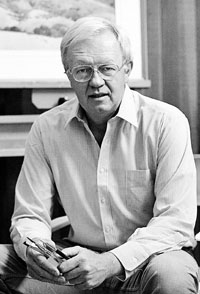
This issue features the art of Robert Sumner, who currently resides in Virginia Beach, Virginia, and is studying arts administration at Old Dominion University. His work has appeared most recently in the New York metropolitan area at exhibits with jurors from the Guggeheim Museum and the New York Museum of Modern Art. His art will next be seen in May 2000 at the Lindenberg Gallery in the Chelsea district of New York City.

Learn more

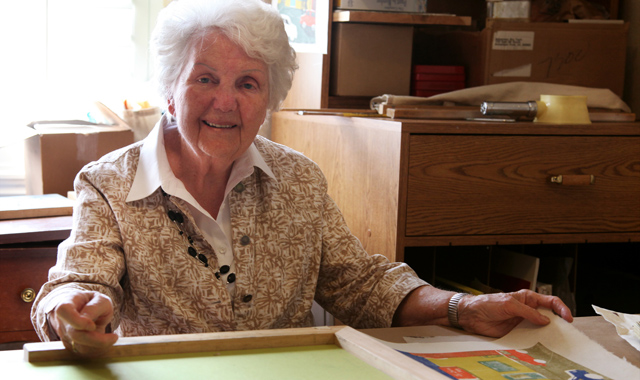
Blanche Wilson

Blanche Wilson was born in 1922 in Salt Lake City and grew up in Portland Oregon. She took art classes all through her school years including Maryhurst College in Portland, Brigham Young University, Weber State University, and the University of Utah. During World War II, she was a draftsman for the Navy. After her marriage to D. Jay Wilson and while raising six children, she taught at the Utah School for the Blind. In 1972 she earned a Master’s degree from BYU in painting and sculpture. She began printmaking in the early 1970s after many years of paint￾ing in oils and watercolor. Over the years her woodcuts developed from small linocuts for Christmas cards to larger black and white images to multi-colored wood block prints, which have won many awards. The prints are in state, university, corporate, and private collections. Being a realist, she finds subject matter everywhere. Both sketches and pho￾tographs are useful in her work with woodcuts. Her output is not large. She may produce four or five new woodcuts in a year. The editions are limited to fifty. All are hand-printed on traditional Japanese printing paper, and she does them as needed.

Learn more

Edward D. Maryon

Edward D. Maryon, one of the west’s finest watercolorists, was a professor, chair of the Department of Art, and, subsequently, Dean of the College of Fine Arts at the University of Utah. His work appeared the first time in Dialogue in the spring issue of 1984 (Vol. 17, No. 1

Learn more

Brad Teare

Brad Teare was raised in Manhattan, Kansas. After graduation from high school, he built a log cabin in the foothills of Moscow Mountain. He stayed there a year, sketching and painting in watercolors. In 1977, he went on a mission to Argentina. Returning to the United States, he enrolled at the University of Idaho in Moscow, Idaho, to study fine art. After two years he transferred to Utah State University in Logan where he studied illustration for three years. His studies completed, Teare moved to New York to pursue a career in illustration. His clients include the New York Times, Fortune magazine, and Random House where he completed book cover illustra￾tions for authors such as James Michener, Ann Tyler, and Rafael Yglesias. In 1997 Teare published his graphic novel Cypher with Peregrine Smith Books. He has also illustrated six children’s books, two with Deseret Books, Dance Pioneer Dance and Will You Still Love Me (both by Rick Walton). Teare’s paintings and prints are on display at The Southam Gallery in Salt Lake City and at Visions of the West Gallery in Logan, Utah. Teare currently lives in Providence, Utah, with his wife and daughter.

Learn more

John Snyder

After 15 years working as a photographer and graphic designer for BYU Publications and Graphics, John Snyder left BYU to freelance in January of 2000. Currently he is pursuing commercial assignments and personal interests, among them a photographic and written study of the Palouse region of Eastern Washington/Northern Idaho. Of the cover photograph, he says, “It was a poignant experience – in the process of trying to arrange these objects from Gene’s life in a pleasing way – to reflect on my association with the England family and to consider Gene’s patience and kind influence on me. I included the engraving of Samuel Johnson because I’d heard Gene read from Rasselas during a visit to London in 1985 and still reflect on the insights I gained then.

Learn more

Warren Floyd Luch

Warren Floyd Luch of Allentown, Pennsylvania, and West Valley City, Utah, is a skilled printmaker, painter (in oils or acrylics), draftsman, graphic designer, and calligrapher who works for the LDS Church’s graphic design department along with his wife, fellow artist Phyllis Luckenbach Luch. He studied at the Philadelphia Museum School of Art and Brigham Young University (B.A.) before he became a frequent guest faculty member for the graphic design program, Department of Art, University of Utah.
Learn more

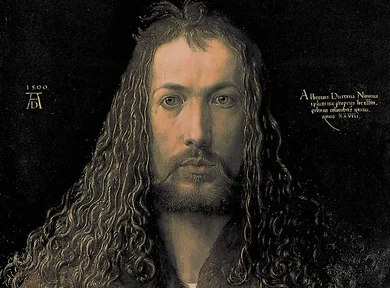
Albrecht Dürer

Born the third son of a Hungarian Goldsmith, Albrecht Dürer (1471- 1528) had begun painting by the time he was thirteen. At fifteen he left his father’s employ and was apprenticed to the painter and printmaker Michael Wolgumut where he began to work with woodcuts and copper engravings as well. He traveled to the Netherlands and often to Italy where he studied Italian Renaissance painters. By 1512 he had become portraitist to the rich and famous of his time, including prominent mer￾chants, clergy, government officials, and Emperor Maximilian I and King Christian II of Denmark. “The Fall of Man,” the 1504 engraving of Adam and Eve which ap￾pears on our cover, was an early product of his Italian studies and sought to express his new ideas of beauty and harmony. It combines the ideals of the south within the Gothic traditions of the North.

Learn more

Scott Carrier

Scott Carrier, whose photographs we feature in this issue of Dialogue, is an independent writer and radio producer. His print stories have been published in Harper’s, Rolling Stone, Esquire, QQ, and Mother Jones magazines. His radio stories have been broadcast on All Things Considered, This American Life , Savvy Traveler, and other public radio pro’ grams. A collection of his stories, Running After Antelope, was published by Counterpoint Press in 2001. “I started taking photographs of the people I interviewed for radio stories. Or at least I did this in the beginning, and then stopped because it seemed like asking too much of the subject to do both things, and also there was no use for the photos in those days. Now there is the World Wide Web, which combines audio and visual photos very well. But the photos in the show [and in this issue of Dialogue] were taken for magazine articles I wrote for various publications. I was hired as a writer, but I also took photos and the magazines liked them and published them.”

Learn more

Kathy Wilson

Kathy Wilson paintings of Sego Gallery featured and Framing Center in Salt Lake City. Her paintings featured on the cover of this issue, Tulips and Aspens at Fish Lake , were done in watercolor. She feels she does her best work with watercolors although she paints with a variety of media, including oils and acrylics. A native of Salt Lake City, Kathy began her career as a land￾scape painter when Mary Kimball Johnson, her art teacher at Lincoln Junior High, gave her an expensive watercolor brush as a graduation present. She enjoys painting nature, where she experi￾ences a deep spirituality. She told Salt Lake magazine that she believes the key to landscape painting is to be aware of nature. “There’s so much to see, yet few people take the time to look, much less to visualize. The spirit of the land doesn’t reveal itself to those unwilling to give themselves to it.” Her creative landscape extends to the human landscape and includes the state of mind that infuses her paintings – carefully observing how we connect and relate. Kathy has five children and seven grandchildren with whom she associates closely. She has served on the boards of non-profit organi￾zations, including The Children’s Center in Salt Lake City and the Sunstone Foundation. She has supported the local Tibetan commu￾nity with projects in Utah and India and helped organize Utah Bolivian Partners to raise funds for the Children’s Mental Health Center in La Paz. She is also active in programs aimed at alleviating poverty, being involved with Results, a citizen lobby that addresses the issues of the poor, and with Microcredit, a program of extending small loans to extremely poor people for the purpose of creating life￾sustaining projects.

Learn more