DiaBLOGue

Not a Rigid Framework | Patrick Q. Mason, J. David Pulsipher, and Richard L. Bushman, eds., War and Peace in Our Time: Mormon Perspectives

The authors of this volume’s concluding essay argue that “Latter-day Saint theology does not constitute a rigid framework which insists on either an idealist or realist approach to war in the scheme of human existence” (262). It is this room for ambiguity that makes War and Peace in Our Time such a valuable contribution, as it highlights the diversity of perspectives on war and peace that can be informed by LDS teachings and history.
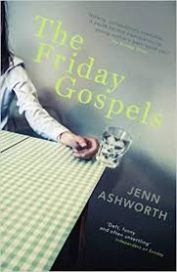
Eternal Families: Persecution Day or Rapture? | Jenn Ashworth, The Friday Gospels

In his introduction to the 1996 Signature publication Tending the Garden, Gene England refers to “President Kimball’s 1977 call for a literature that includes the full range of Mormon experience: ‘struggles and frustrations; apostasies and inner revolutions and counter-revolutions . . . counter-reactions . . . persecution days . . . rapture.’” I love that list—persecution days and rapture, yes! 

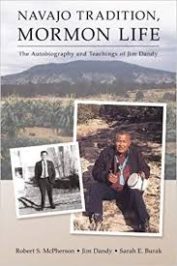
The ISPP Way and the Navajo Way | Robert S. McPherson, Jim Dandy, and Sarah E. Burak, Navajo Tradition, Mormon Life: The Autobiography and Teachings of Jim Dandy

Months after we moved to Blanding, Utah, an LDS Navajo neighbor asked if my ten-year-old daughter would like to play a role in the Voices of San Juan Pageant, a local, outdoor LDS production then staged every year. I’d never seen the pageant but said I thought that she’d like taking part. Then my neighbor told me my girl would be playing a Navajo toiling among other Navajos in a scene portraying the Long Walk. The suggestion that my very white child assume the role of a Navajo in this reenactment of one of the most tragic events in Navajo history startled me so deeply that I laughed out loud. My neighbor laughed, too. But she still wanted my daughter in the role. 

The Gift of Tongues

Dead. The rose bushes, the dogwood, the spirea, and the green spreading yews, all dead: the entire hillside, a dusty memorial to her beautiful yard. The dry leaves crumbled between Mary’s fingers and fell into…

An Interview with Rabbi Harold Kushner

Rabbi Harold Kushner is the author of When Bad Things Happen to Good People, along with numerous other books addressing the relationship between religion and lived adversity. He served as the congregational rabbi at the Temple Israel of Natick for over twenty-five years. Gregory A. Prince cofounded Virion Systems, Inc., a biotech company dedicated to the prevention and treatment of pediatric diseases. He is the author of David O. McKay and the Rise of Modern Mormonism as well as several other books on the history of the priesthood.

Jungle Walks

The gods of asphalt and pure dirt 
Do not disdain each other’s tread. 
The jungle’s feet 
Stalk through the city like lost deer 

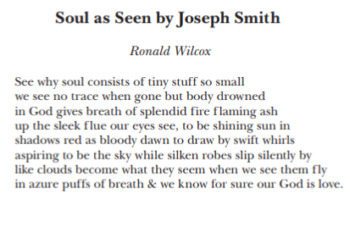
Soul as Seen by Joseph Smith

See why soul consists of tiny stuff so small 
we see no trace when gone but body drowned
in God gives breath of splendid fire flaming ash
up the sleek flue our eyes see, to be shining sun in

What Kind of Truth Is Beauty?: A Meditation on Keats, Job, and Scriptural Poetry

Two poems that I read during my sophomore year of college ended up changing my life. The first of these, John Keats’s “Ode on a Grecian Urn,” changed it quickly by helping me decide to change my major from accounting to English. It wasn’t so much that I was impressed with Keats for being such a good writer as much as I was impressed with myself for being such a good reader and for sort of understanding “Ode on a Grecian Urn.” It made me feel smart, perhaps for the first time in my life, and I decided that I liked feeling smart and wanted to spend the rest of my time in college understanding poems and feeling like a genius. So I majored in English. In fact, I majored in English three times. As a graduate student, a teaching assistant, and, eventually, as a professor of English literature I continued to teach “Ode on a Grecian Urn” in a variety of courses more or less the same way that I originally understood it the first time I read it. 

Ex-Mormon Narratives and Pastoral Apologetics

The personal exit from any organization, especially those which are socially controversial, tends to produce a very specific type of narrative or story which gives an account of the individual’s experience within, and eventual withdrawal from, the organization. This is especially true in the case of modern Mormonism. Vocal ex-Mormons are often motivated to produce and disseminate exit narratives, often written in the context of pop-psychological terminology such as recovery (e.g. “Recovery from Mormonism”), which describe in various ways their victimization at the hands of Mormonism generally and their subsequent movement from being victims to victors.