DiaBLOGue

Why Nature Matters: A Special Issue of Dialogue on Mormonism and the Environment

I became active in the Church while I was serving in the U.S. Army, stationed in Germany in the late 1970s. I was just starting to feel my way around the gospel and had come to the German Alps to attend a single adult conference. The conference was a powerful reorientation into the Church; but one day, I decided to dodge a few sessions because I wanted to hike a trail someone had recommended. It was supposed to be lovely—winding through high alpine meadows and meandering through dense forests still fairy tale dark and old. And it was. The woods were quiet and serene, capturing a mood of stillness. A reverence. I passed few people, but I did not feel alone. A presence was with me, sheltering me, being in attendance with me, sharing something that seemed to fill the air with promise. I felt contented and happy. 

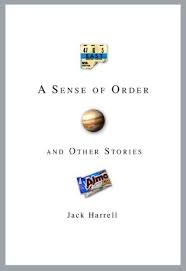
Harrell’s Mettle | Jack Harrell, A Sense of Order and Other Stories

How do you read a collection of short stories by one author? Do you curl up with the book the same way you would with a novel, reading one story after another until your leg falls asleep or your stomach growls for food or the phone rings? Do you read one story, then close the book to think about it, perhaps reopening the book to reread parts or the whole? Do you expect the stories to be connected by characters or theme or tone and therefore search for universal elements? Do you come to each story afresh, hungry for wonder and new insights? 

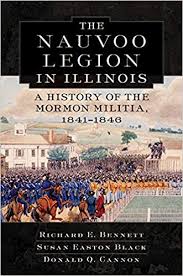
Pomp, Circumstance, and Controversy | Richard E. Bennett, Susan Easton Black, and Donald Q. Cannon, The Nauvoo Legion in Illinois: A History of the Mormon Militia, 1841–1846

From its gorgeous dust jacket to its prosaic index, this valuable book provides narrative history, data compilations, and unexploited documents shedding light on one of the most unusual, controversial organizations of antebellum American military his tory, the short-lived Nauvoo Legion of Hancock County, Illinois. In the process, the authors add to our understanding of the violent forces that led to the 1844 assassinations of Joseph and Hyrum Smith as well as the subsequent westbound Mormon exodus from Nauvoo, then one of the largest cities in Illinois.

Finding the Presence in Mormon History: An Interview with Susanna Morrill, Richard Lyman Bushman, and Robert Orsi

Susanna Morrill: I’d like to start the conversation by asking four framing questions relating to the issue of religious experience: First, are “abundant events” proper subjects of study for historians of religion? Second, how do historians of religions go about studying such experiences within the methodological expectations of the academy? Third, what are the responsibilities of scholars to the believers whom they write about? And fourth, to what extent will, and should, the faith of scholars appear in their work? Richard, could you start start the discussion with the ideas Robert offers in his article? 

Dishes

Yesterday morning 
as I was sitting cross-legged at the kitchen table 
enjoying a bowl of corn flakes 
Jesus walked into our apartment. 
“Hello,” he said. “I’m Jesus. 
“I’m here to do the dishes.” 

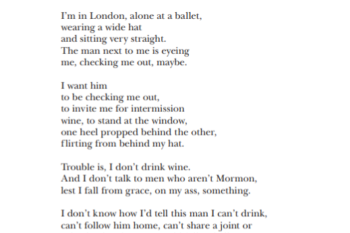
Intermission Wine

I’m in London, alone at a ballet, 
wearing a wide hat 
and sitting very straight. 
The man next to me is eyeing 
me, checking me out, maybe.