Straight Home
March 17, 2018Six cars pulled through the intersection, one after the other over the course of an hour, but none of them was hers. Barefoot, Bart waited on the slat bench outside his front door, picking away…



Six cars pulled through the intersection, one after the other over the course of an hour, but none of them was hers. Barefoot, Bart waited on the slat bench outside his front door, picking away…
Badge and Bryant Braunhil were first cousins, but they could have passed for fraternal twins, having—both of them—bright blue eyes, big grins, and unkempt blond hair. They lived in Linroth, a Mormon town in northern…
My husband Jake loves women’s fashions. A lot. One of his hobbies is spending time at the mall, looking for shoes, dresses, make-up, and jewelry, and he is an expert at finding clothes that are…
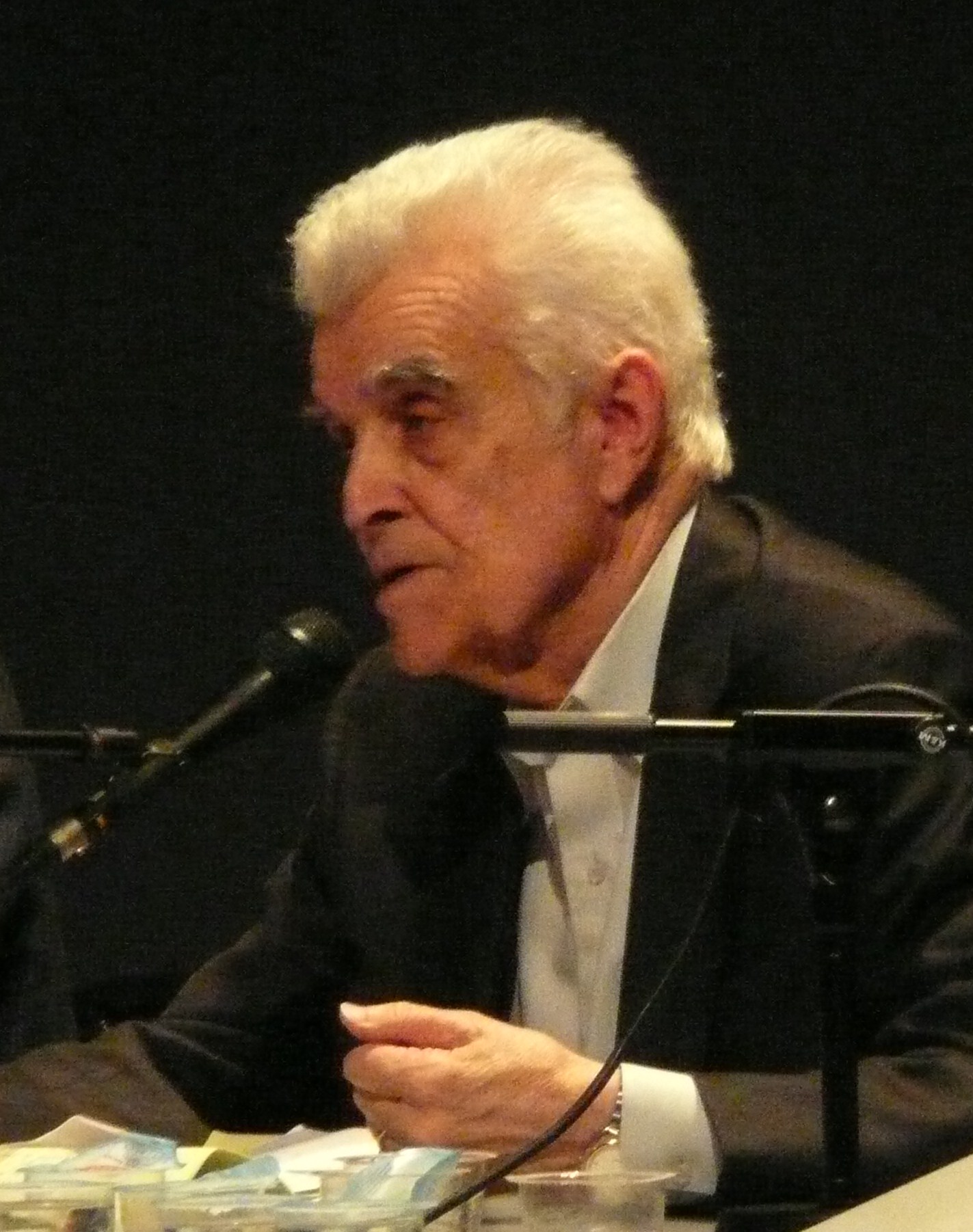
Note: Mack Stirling, Director of Cardiothoracic Surgery at the Munson Medical Center, Traverse City, Michigan, and Scott Burton, director of the LDS Institute of Religion at Ohio State University, conducted this interview with René Girard,…

Many who revere the scriptures as the inspired word of God are nonetheless disturbed by them. The scriptures contain inconsistencies and outright contradictions. Particularly disturbing for many are scriptural portrayals of God as wrathful, vengeful, and violent. This article will introduce these problems with several examples from the Old Testament, then present a succinct overview of René Girard’s theory of culture because of its unique value in helping us to interpret these difficult texts. The final portion of the paper will present selected texts from the LDS canon in light of Girard’s theory.

Produced by Brigham Young University and presented by the Deseret Sunday School Union of the Church of Jesus Christ of Latter-day Saints in 1969, the short film Johnny Lingo is among the best-known texts in the LDS Church, familiar even to people who never made it through more than a few pages of the Book of Mormon.
Dialogue 43.1 (Spring 2010): 1–36
And in fact, what might it mean that God “used” evolution tocreate life’s diversity? Was this a choice for God among other al-ternatives? Do Wildman’s pessimistic conclusions hold for Mor-monism? Does evolution imply a noninterventionist Deity? Arethere more optimistic views possible, some of which may actuallysuggest that evolution enhances and expands our view of God?
Dialogue 45.3 (Fall 2012): 1–10
In Winter 2010, Chris Smith and I published an article in Dialogue demonstrating that no more than ~56 cm of papyrus can be missing from the interior of the scroll of Hôr—the papyrus Joseph Smith identified as the Book of Abraham. John Gee has responded by claiming that our method is “anything but accurate” and that it “glaringly underestimates the length of the scroll.” He states that “Two different formulas have been published for estimating the original length of a scroll,” then attempts to show that “Hoffmann’s formula approximates the actual length of the papyrus,” whereas “Cook and Smith’s formula predicts a highly inaccurate length.” The fact is, the two formulas are completely equivalent. They are both exact expressions of an Archimedean spiral and they yield precisely the same results, if correctly applied.

It is a great pleasure for me to be here with all of you Cambridge veterans and to be asked to represent the huge cohort of LDS women who have sat in these pews—those who have preceded me and those who have come after me. What an opportunity this has been to recall some of my happiest and most vivid memories. What happened to me here? Just about everything important that has happened in my long and eventful life.

Michael Slade has been photographing all over the world for the past twenty years. A Cache Valley native, Slade received his B.A. degree in photography from Utah State University (1994) and is currently an MFA…