DiaBLOGue

Hermeneutic Adventures in Home Teaching: Mary and Richard Rorty

When philosopher Alastair MacIntyre came striding into my Vanderbilt University office brandishing the New York Times in October of 1985, I knew something was up. “Congratulations,” he said, “your church has just entered its Renaissance period.” I was used to seeing him walk into Furman Hall on Ash Wednesdays with a gray streak on his forehead, and we had talked about Mormonism, but I had no clue what he was talking about. He showed me the front page of the paper. It was the Mark Hofmann bombings—murders to cover up Hofmann’s forgeries. “It only took you 150 years,” Alastair noted. “It took us a millennium and a half.” 
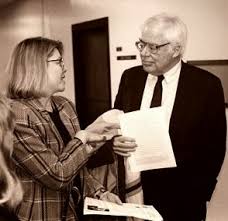
Divine Darwinism, Comprehensible Christianity, and the Atheist’s Wager: Richard Rorty on Mormonism—an Interview with Mary V. Rorty and Patricia Rorty

Cranney: Richard mentions in Philosophy and Social Hope the dangers of fundamentalist religions and the extent of their political influence. Where did Mormonism fit on the fundamentalist continuum? 

Mary Rorty: That’s a very interesting question because that’s something that has changed a great deal in my lifetime. The thought that Mormonism now considers itself in part an ally of the Evangelical Protestant movement is a surprise to many people, and that’s certainly not the side of Mormonism to which Richard had been exposed. 

Cranney: Were there any specific instances . . . Of course, he died before Proposition 8 in California.

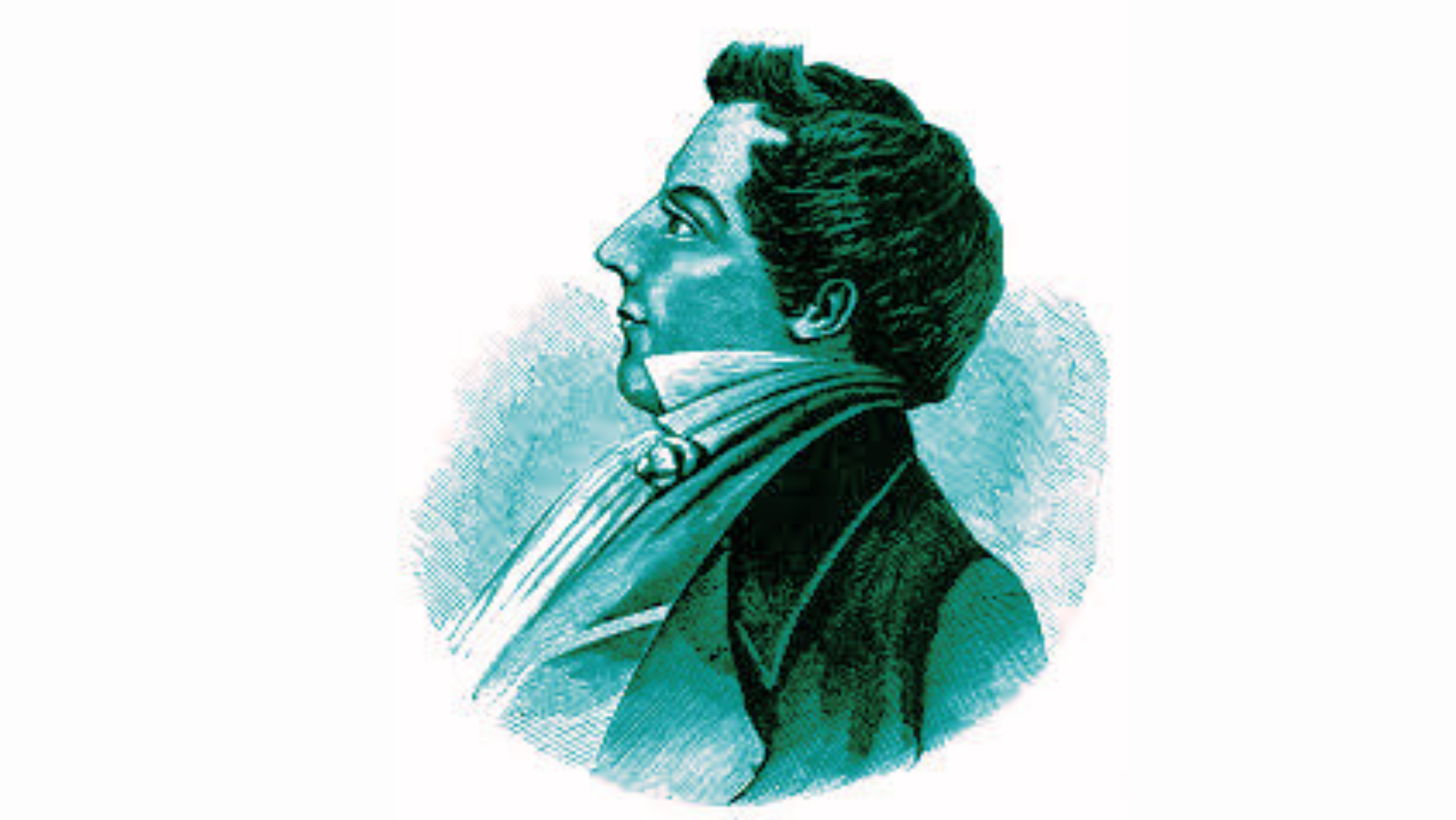
Joseph Smith in Hermeneutical Crisis

Marvin Hill argued in 1989 that the fundamental problem early Mormonism was designed to address was the problem of pluralism. Pluralism, according to Hill, caused a situation of social disintegration and insecurity to which Mormons hoped to bring stability and uniformity.Hill’s analysis is insightful in its attention to the institutional and political issues but does not fully engage the religious dimensions of the problem

Joseph Smith as a Creative Interpreter of the Bible

My involvement in biblical studies has also awakened in me an interest in other holy books. In the 1970s, I had the opportunity to do some work on the Qur’an, a fascinating combination of things familiar and unfamiliar for a biblical scholar. I had a vague hunch that, in a somewhat similar way, the Book of Mormon might make exciting reading, but a contact with that book and its study came about quite accidentally.

Letters to the Editor

George D. Smith, George D. Smith Responds
Emily Parker Updegraff, Unapproachable Nature

Hidden Treasures

Shortly after my family and I moved to Bloomington, Indiana, three years ago, my six-year-old son invited a neighbor boy over to play. The neighbor asked if they could go geode hunting in the wooded creek behind our house. I did not know what geodes were or what kind of artillery might be required to hunt them, but I sent the boys out with my blessing, hoping they could not get into too much trouble. A little while later, I saw them staggering out of the woods, splattered with mud and clay. They were carrying a heavy rounded rock, which they dumped unceremoniously on the porch. 

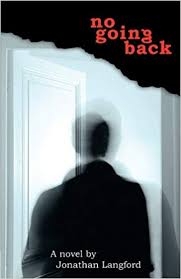
Characters to Care About | Jonathan Langford, No Going Back

Google “gay” and “Mormon” these days, and you’ll be flung— headfirst—into a veritable deluge of vitriol and sanctimony. Of course, it didn’t start with California’s Proposition 8. No, that river’s path pushes back, through the…