

 Back to full Issue

Articles/Essays – Volume 59, No. 1
From Protest Poster to Meme: The Visual Language of Queer Dissent at BYU
The protests of 2019 and 2020 at Brigham Young University (BYU) stand out as a notable period of rupture within an otherwise doctrinally strict and culturally conventional institution. Often pulling up to three hundred student participants, these protests marked a watershed moment for LGBTQ+ discourse at the conservative flagship of the Church of Jesus Christ of Latter-day Saints.[1] What unfolded was not only a clash over policy, but also a reframing of where and how dissent is voiced—a shift that poses an invitation to reconsider the very spaces and languages in which political discourse takes place. As theorist Jürgen Habermas famously argued, the “public sphere” once found its footing in coffee houses and journals with the circulation of political art and pamphlets, where private individuals gathered to debate ideas and challenge institutions.[2] Today, for many queer and transgender students at religious universities like BYU, that public sphere has moved online, where networked, participatory arenas negotiate identity and resistance. As the most consequential iterations of public discourse now unfold online, social media has become a digitized successor of the salons and coffee houses that once hosted debates of the early public sphere.
The emergence of the Instagram account @HonorCodeStories was the catalyst for the BYU protests. The account rapidly gained traction by sharing anonymous recountings of student experiences with the school’s honor code, which dictates student moral conduct rules, and Title IX office, which legislates sexual- and gender-based discrimination complaints.[3] These stories highlighted issues such as students being penalized for minor infractions, fear of reporting sexual assaults due to potential honor code violations (i.e., if one were sexually assaulted, would they be in violation of the prohibition of premarital sex?), and discriminatory practices. A seemingly hopeful change to the honor code in the form of omission of rules around same-sex relationships only to be quickly reversed fanned the flames. Many LGBTQ+ students and allies interpreted the change intitially as tacit acceptance of their relationships, and celebrations followed. Photos of same-sex couples holding hands or kissing circulated online. But on March 4, 2020, BYU issued a clarifying statement reaffirming that same-sex romantic behavior was still “not compatible” with the honor code, effectively reinstating the prohibition without modifying the document’s text. The university stated, “Same-sex romantic behavior cannot lead to eternal marriage and is therefore not compatible with the principles included in the Honor Code.”[4] Many felt betrayed by an institution that had seemed—if only briefly—to move toward greater acceptance.
Visual Resistance and the Rise of the Meme Poster
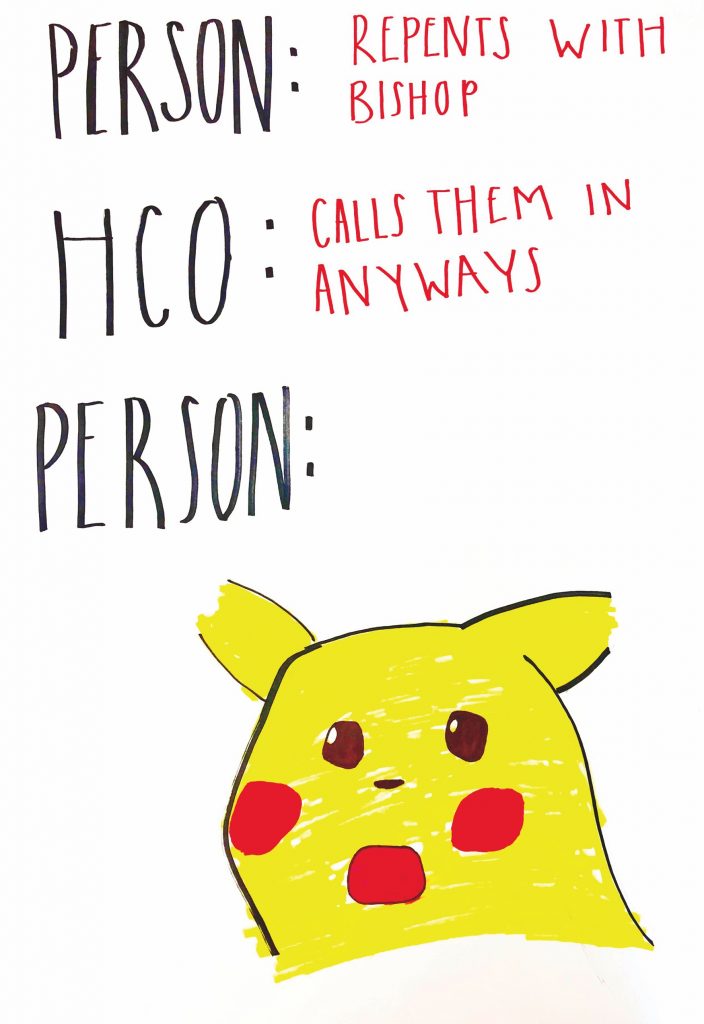
Figure 1. Shocked Pikachu BYU protest poster, 2019. Photo courtesy of Rebecca de Schweinitz.
Enter the posters. Students and allies organized protests on campus, including a large demonstration outside the Wilkinson Student Center, where signs expressing queer solidarity and protest appeared en masse. These posters—paper-based, often handwritten or printed with meme imagery and ironic captions—moved rapidly from the private space of the university campus quad to the public arena of digital commons, gaining traction through hashtags like #HonorCode, #QueerAtBYU, and #Deznat (“Deseret Nationalism,” a far-right LDS nationalist movement). One, for instance, pictured a hand-drawn image of Pikachu, a character from the anime Pokémon, in a jab at BYU administration (figure 1). The sign shares a reaction to the conflicting and overriding authority of the honor code, first expressing the steps a queer individual might take within the religion—confession to an authority, since expression of same-sex attraction is prohibited.[5] In response, the honor code “calls them in anyways.” A confused Pikachu reacts to this “calling in,” mouth agape and eyes wide in shock. The poster appropriates the notorious 2018 “Shocked Pikachu” meme, which, according to the website Know Your Meme, utilizes a screenshot of Pikachu from the series as a “reaction image paired with captions.” In this configuration, though the outcomes of an event are predictable, they “nevertheless leave one surprised.”[6] As a call to action to create social change, this protest poster adopted popular imagery to react to the BYU situation with shock and awe, despite a predictable outcome. In their combination of satire, meme culture, and agitprop (agitation propaganda) aesthetics, the posters reveal not only the affective dimensions of queer Mormon resistance but also a shifting visual and rhetorical grammar of dissent—one grounded in digital counterpublics and online visibility rather than sanctioned institutional channels.
The visual language of the posters is an important focal point of protest, capturing the affective labor of dissent in a religious institution that historically privileges obedience, decorum, and heteronormative expression. Though protest art and paraphernalia are only just starting to be recognized as valuable contributions within art history, the BYU posters represent a contemporary example of agitprop that merges traditional protest tools with the aesthetics and distribution mechanisms of internet meme culture.[7] In their adaptation and handcrafted reproduction of popular media, the posters signal a role digital publics take in shaping dissent, marking a critical linguistic and semiotic shift that aligns with characterizations I and others have made of LDS culture’s relationship to modern technology.[8] Understanding these works as both art and activism highlights how digital publics now carry forward the expressive and transformative possibilities once found in the streets, print shops, and ateliers of earlier movements.
The eruption of visual protest at BYU did not occur in isolation. Rather, it mirrored—and was shaped by—a broader cultural moment in the US, where questions of race, sexuality, and power fueled a resurgence of grassroots political action and visual dissent. Journalist Michael Grunwald has termed the political unrest the US has experienced in the past decade the “Great Awokening,” describing the surge in progressive activism and heightened awareness of social justice issues, particularly among younger Americans.[9] Political commentators and scholars have noted a revitalization in the culture wars of the 1990s, where art, sexuality, race, immigration, and other “hot-button” topics exist at the axes of politics, consumption, and public policy. And perhaps these posters become more pressing to highlight as Americans enter another tumultuous start to an administration that, in a few short months, enacted rapid changes to immigration policy and bodily autonomy and an overall structural revamp of the entities that govern various departments. The National Portrait Gallery director of Smithsonian, for instance, was one of many employees fired by Trump within six months of assuming his presidency.[10] Outside of the troubling implications of a more centralized national art distribution focused on reforming from the “obscene,” these changes have been met with nationwide backlash in the form of internal rejection, increased political commentary, and protest.
Meme Fluency and the Art of Protest
The visual forms produced during the 2019 and 2020 protests occupy a curious but powerful space between traditional activist art and internet culture. Protesters wielded signs that recontextualized popular memes and their styles—like “Karen” faces (figure 2); sans-serif Impact fonts (figure 3); and captioned reaction images, such as “Shocked Pikachu” or text emoticon animals (figure 4)—to frame the honor code not just as a doctrinal issue but as a betrayal of institutional trust. Other posters used hand-lettered irony or all-caps rage to deliver satirical messages such as “The Only Big Brother I need watching me #thatsnothonor” (figure 5), “Y?” (figure 6), or “Jesus ain’t no snitch (but Judas was)” (figure 7).
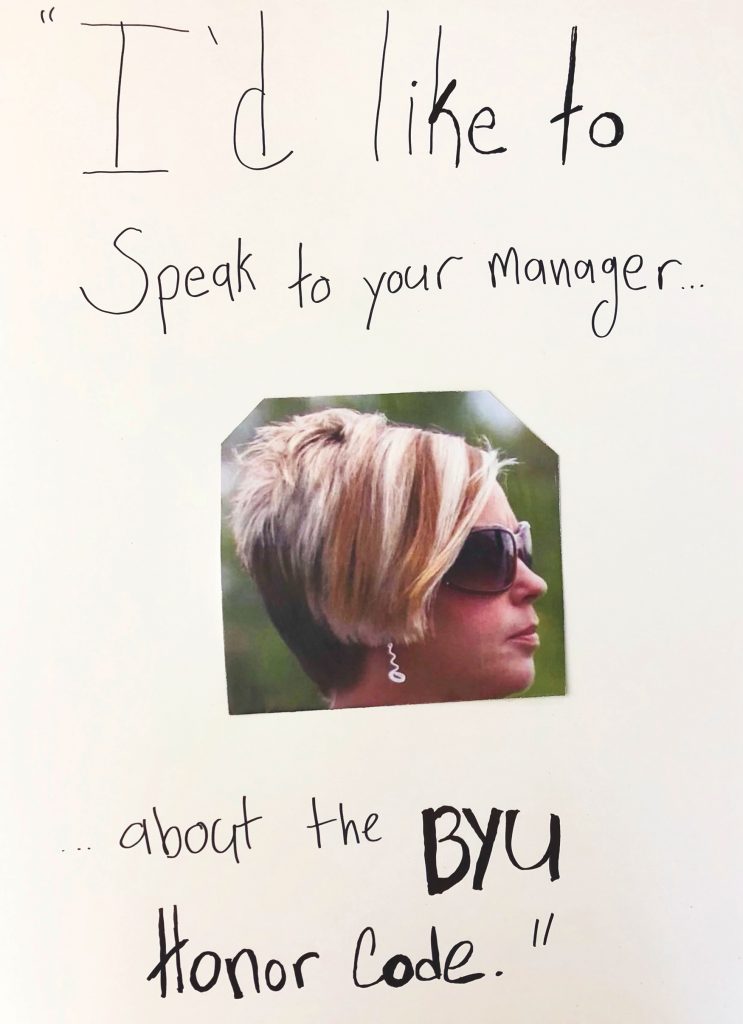
Figure 2. Karen meme BYU protest poster, 2019. Photo courtesy of Rebecca de Schweinitz.
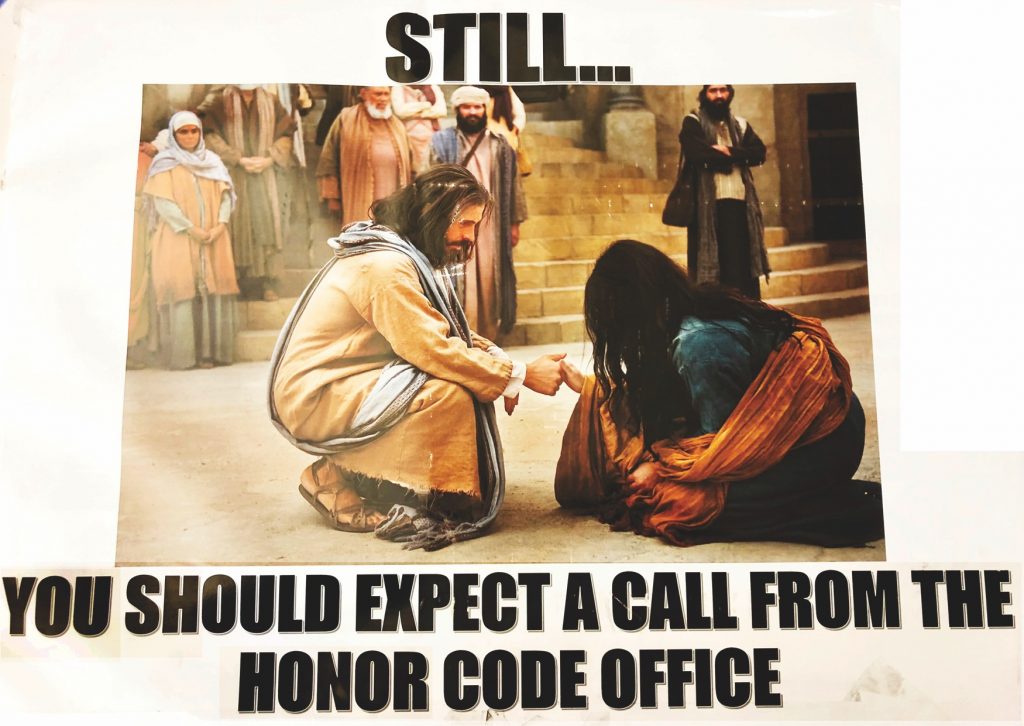
Figure 3. BYU protest poster featuring sans-serif Impact font utilized for memes, 2019. Photo courtesy of Rebecca de Schweinitz.
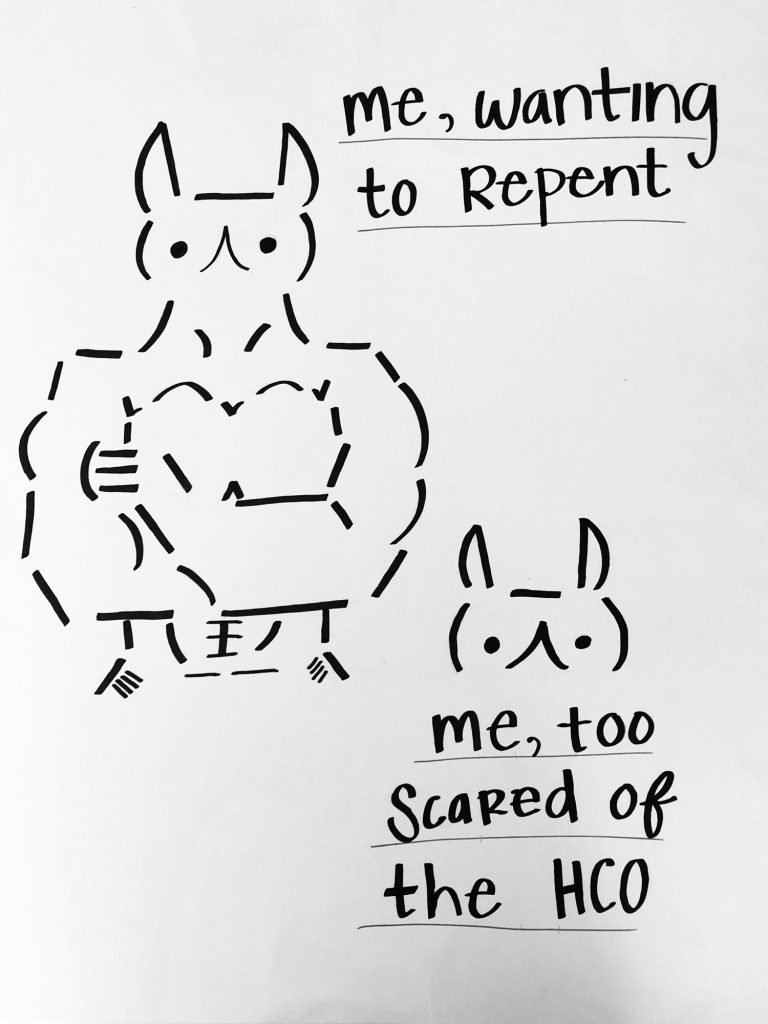
Figure 4. BYU protest poster with text emoticon images, 2019. Photo courtesy of Rebecca de Schweinitz.
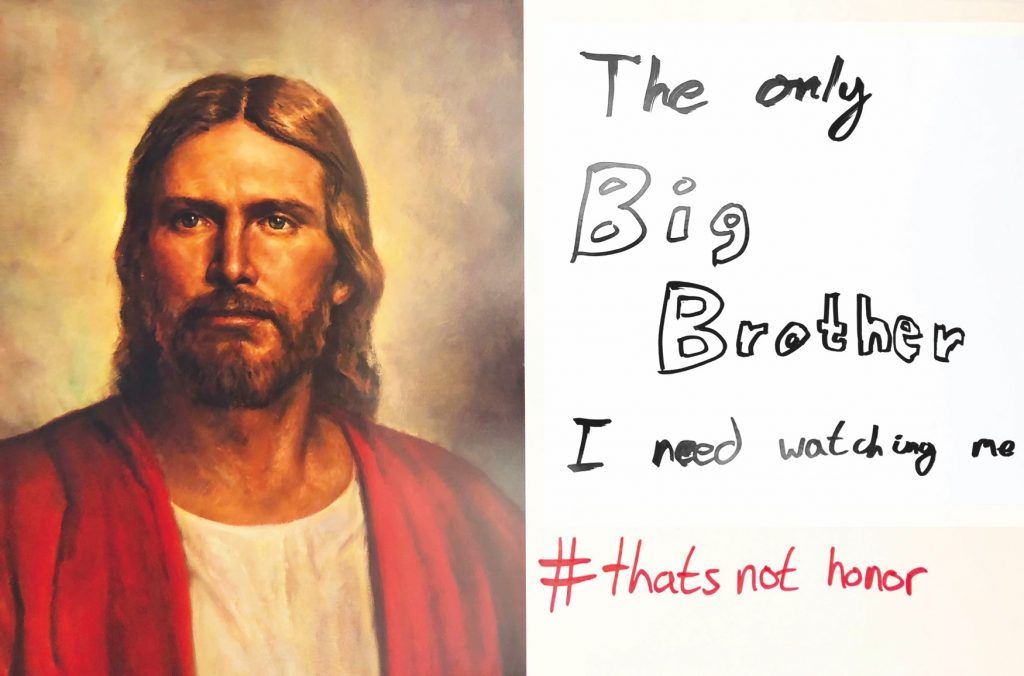
Figure 5. BYU protest poster, 2019. Photo courtesy of Rebecca de Schweinitz.
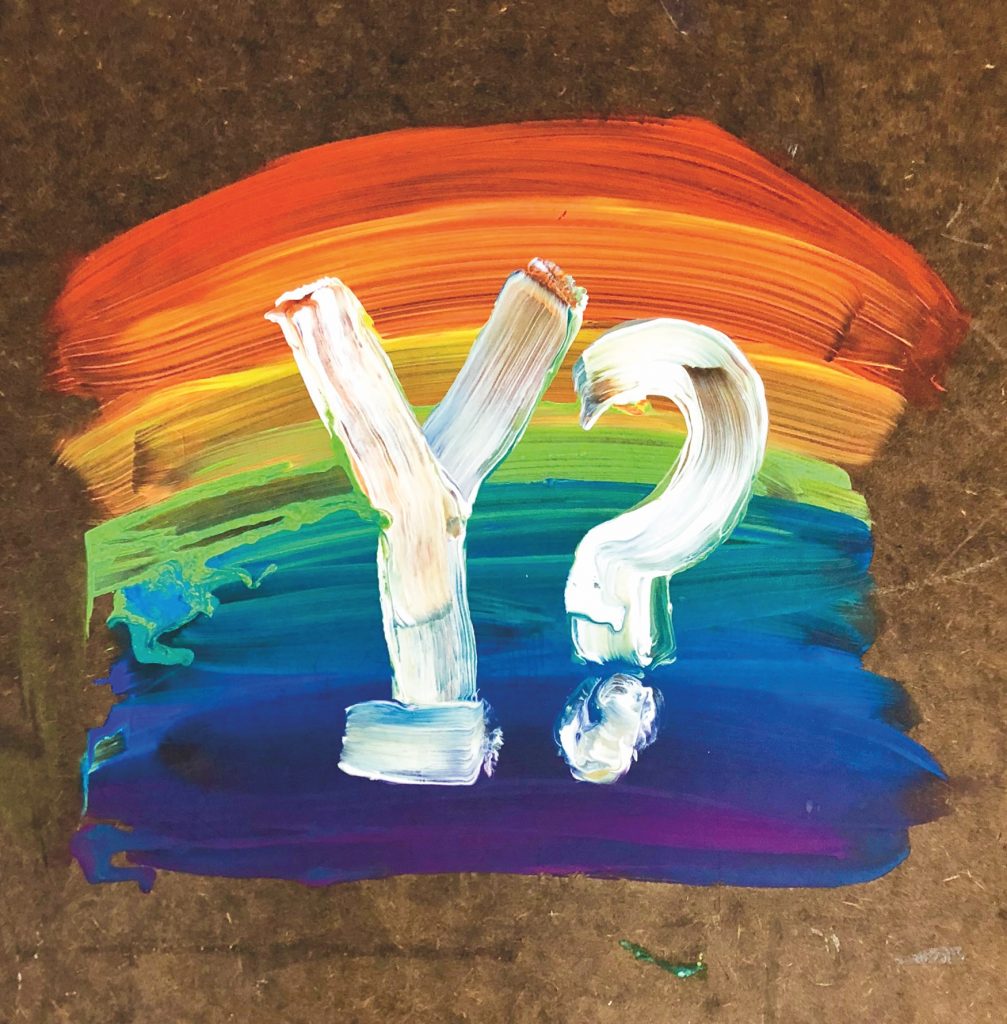
Figure 6. BYU protest poster, 2019. Photo courtesy of Rebecca de Schweinitz.
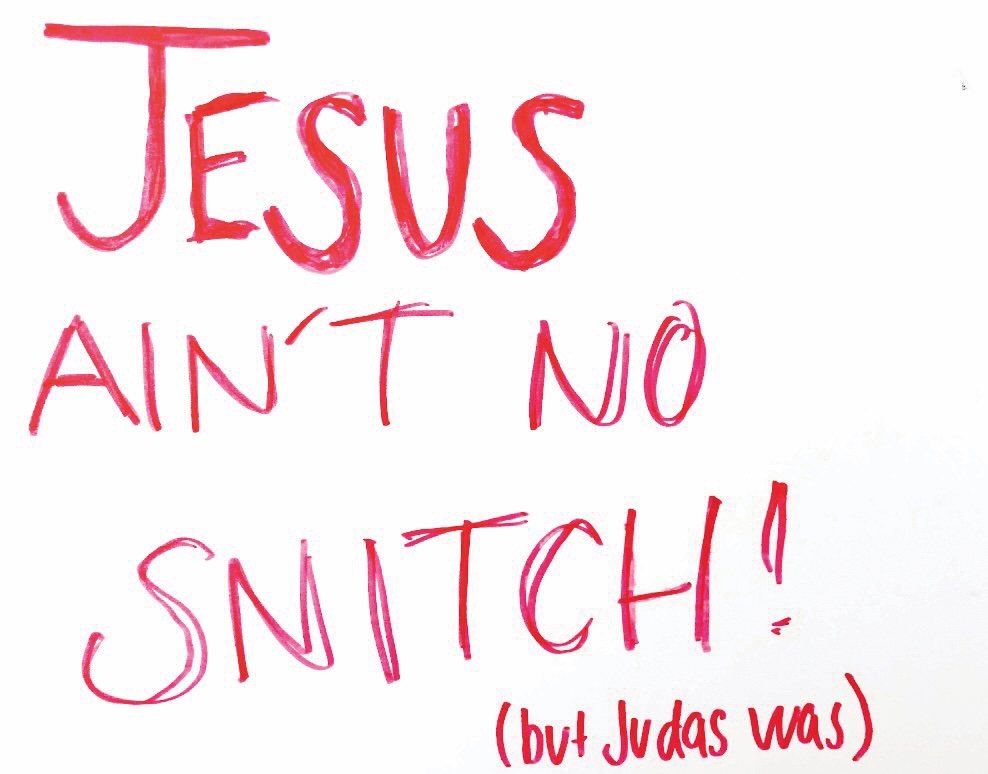
Figure 7. BYU protest poster, 2019. Photo courtesy of Rebecca de Schweinitz.
These works might not be considered “art” in a traditional sense, nor are they mere byproducts of protest. Rather, they operate within a visual tradition that uses familiarity and humor to destabilize power. The posters are both calls to action and aesthetic objects. As communications scholar Limor Shifman notes, memes “allow people to express political opinions, to create art, and to participate in public discourse.”[11] The use of memes in these BYU posters demonstrates a semiotic fluency where students reworked visual language associated with internet play into institutional critique. The physical and digital coexistence of these posters underscores their dual function. Printed and taped up around campus or held aloft during protests, the posters reclaimed physical space typically dominated by ecclesiastical or administrative authority. At the same time, photographs of these posters shared on social media extended their reach into digital spheres where institutional control is far more porous. Images can serve as tools of symbolic and discursive resistance, especially when circulated across platforms that blur private and public boundaries.[12] In this sense, the BYU posters were participatory in both design and reception. They invited replication, remixing, and circulation—hallmarks of meme culture but also of contemporary activist art. Their ephemerality (many were removed within hours) heightened their urgency, but their online afterlives ensured their continued impact.
The Atelier Populaire, a workshop of Parisian students and workers during the 1968 uprisings in France, provides an aesthetic and ideological lineage. There, artists produced quickly screen-printed posters and opaque projections with biting slogans like “Be young and shut up” or “The boss needs you, you don’t need him.” These works, collected in the edited volume Beauty is in the Street, echo the BYU protests in their combination of institutional critique, irony, and rapid production.[13]
In all these traditions, the poster functions as art and material of dissent. At BYU, this function becomes more pronounced given the LDS Church’s institutional artistic output—characterized by reverent, often didactic imagery, “yearbook”-esque paintings of Christ, or the trope of meek, “contemplative women”—and the relatively low visibility of resistance within Church-owned spaces.[14] The posters therefore mark not just a moment of protest, but one of rupture in the institution’s visual and theological landscape. Though artists and groups have branched out from these more figurative representations earlier, like the posters, they were rarely formally accepted by the institution itself until more recently with their acquisition by the LDS Church History Museum or BYU.[15]
The Digital Public Sphere
The eruption of protest posters on BYU’s campus signals not only a reaction to a policy (and its potential to change) but also a transformation in how and where dissent takes place. At once physical and digital, local and global, these posters embody a contemporary shift in the geography of protest, one that aligns with critical adaptations of Habermas’s concept of the public sphere, a discursive arena where private individuals assemble to engage in rational debate, shaping public opinion in ways that influence political action. Historically, these spaces were salons, coffee houses, and journals—sites of dialogue beyond the reach of church or state.[16] Protest posters, especially those of the Enlightenment and revolutionary eras, played a critical role in these settings: visually reinforcing ideas that were otherwise transmitted textually.
Habermas’s model has been expanded and critiqued in the decades since. Feminist philosopher Nancy Fraser challenged his assumption of a singular, unified public sphere, instead proposing the existence of “subaltern counterpublics,” or alternative spaces in which marginalized groups develop discourses that contest dominant narratives.[17] The queer protest at BYU emerges from such a counterpublic, one situated within (but often excluded from) the broader LDS cultural and institutional public. Social media platforms like Instagram, Twitter (now X), and TikTok serve as what social scientist Zizi Papacharissi calls “networked publics”—fluid, algorithmically shaped spaces where identity, community, and protest coalesce.[18] The BYU protest posters, while materially present on campus for a short period, achieved their greatest impact and distribution through digital reproduction. Posts featuring these images were liked, shared, and commented on by thousands, many of whom were not affiliated with BYU but connected via shared queer or religious identities.[19] This digitally mediated circulation does more than extend the posters’ reach—it also reframes their rhetorical function. A hand-drawn sign reading “You said it was okay” taped to a lamppost might be ignored or torn down in Provo, Utah. But as a photo posted on Instagram with the caption “#QueerAtBYU,” it becomes part of a larger narrative network—a mosaic of shared disillusionment and solidarity. The poster functions as not just protest ephemera but also a node in a digital counterpublic.
Conclusion: A Grammar of Queer Mormon Protest
Particularly significant in the case of BYU is how the digital public sphere enables what the physical campus often cannot: open dissent. In LDS spaces, where institutional critique is frequently viewed as disloyalty, and where formal avenues of unrest are limited, social media has become a dominant arena for articulating grievances, forming coalitions, and building queer Mormon identity.[20] The poster-memes of BYU do more than criticize a specific policy; they visualize the right to voice—to speak publicly, queerly, and communally, within a religious tradition that many have claimed renders such speech invisible. Returning to Habermas, the strength of a public sphere lies not in its formal structures but in its ability to foster critical debate. The visual language of the BYU protest posters—borrowed from memes, printed in haste, and distributed through digital tools—embodies a grammar of protest. It is irreverent, fast-moving, and collectively produced. And it speaks in a vernacular shaped not by theologians or administrators, but by students finding each other in a moment of betrayal and creative questioning.
[1] Daysha Eaton, “A Rare Sight at Brigham Young University as Students Protest the Honor Code Office,” NPR, as heard on All Things Considered, April 16, 2019. https://www.npr.org/2019/04/16/714056430/a-rare-sight-at-brigham-young-university-as-students-protest-the-honor-code-offi.
[2] Jürgen Habermas, The Structural Transformation of the Public Sphere: An Inquiry Into a Category of Bourgeois Society (1962; MIT Press, 1991).
[3] Liesl Nielsen, “‘This Is All About Love’: BYU Students Sit In to Protest Honor Code,” KSL, Apr. 12, 2019, https://www.ksl.com/article/46530636/this-is-all-about-love-byu-students-sit-in-to-protest-honor-code?.
[4] Doug Erickson, “BYU Clarifies Honor Code Does Not Allow Homosexual Behavior,” Salt Lake Tribune, Mar. 4, 2020.
[5] “Same-Sex Attraction,” The Church of Jesus Christ of Latter-day Saints, accessed June 1, 2025, https://www.churchofjesuschrist.org/study/manual/gospel-topics/same-sex-attraction?lang=eng.
[6] “Surprised Pikachu,” Know Your Meme, accessed Oct. 1, 2025, https://knowyourmeme.com/memes/surprised-pikachu.
[7] See, for instance, Brooklyn Museum’s 2015–2016 show titled Agitprop! Details at https://www.brooklynmuseum.org/exhibitions/agitprop. Lucy Lippard, Get the Message? A Decade of Art for Social Change (E. P. Dutton, 1984).
[8] Amanda Beardsley, “The Female Absorption Coefficient: The Miniskirt Study, Gender, and Latter-day Saint Architectural Acoustics,” Technology and Culture 62, no. 3 (2021): 659–84; John Durham Peters, “Recording Beyond the Grave: Joseph Smith’s Celestial Bookkeeping,” Critical Inquiry 42, no. 4 (2016): 842–64; Mason Kamana Allred, Seeing Things: Technologies of Vision and the Making of Mormonism (University of North Carolina Press, 2023); Gavin Feller, Eternity in the Ether: A Mormon Media History (University of Illinois Press, 2023); Peter McMurray, “A Voice Crying from the Dust: The Book of Mormon as Sound,” Dialogue: A Journal of Mormon Thought 48, no. 4 (2015): 3–44.
[9] Michael Grunwald, “How Everything Became the Culture War,” Politico, Nov./Dec 2018, https://www.politico.com/magazine/story/2018/11/02/culture-war-liberals-conservatives-trump-2018–222095/; Thomas Chatterton Williams, “Is Wokeness One Big Power Grab?,” The Atlantic, Nov. 16, 2024, https://www.theatlantic.com/ideas/archive/2024/11/musa-al-gharbi-wokeness-elite/680347/.
[10] Elizabeth Blair, “Smithsonian Board to Keep Institution ‘Free from Political or Partisan Influence,’” NPR, June 10, 2025, https://www.npr.org/2025/06/10/nx-s1–5428588/smithsonian-trump-sajet-bunch.
[11] Limor Shifman, Memes in Digital Culture (MIT Press, 2014), 4.
[12] Sarah J. Jackson, Moya Bailey, and Brooke Foucault Welles, #HashtagActivism: Networks of Race and Gender Justice (MIT Press, 2020), 10.
[13] Johan Kugelberg and Philippe Vermès, eds., Beauty Is in the Street: A Visual Record of the May ’68 Paris Uprising (Four Corners Books, 2011).
[14] Amanda Beardsley and Mason Allred, eds., Latter-day Saint Art: A Critical Reader (Oxford University Press, 2024)
[15] Chase Westfall, “Toward a Latter-day Saint Contemporary Art,” in Beardsley and Allred, Latter-day Saint Art, 594–625.
[16] Habermas, Structural Transformation of the Public Sphere.
[17] Nancy Fraser, “Rethinking the Public Sphere: A Contribution to the Critique of Actually Existing Democracy,” Social Text, no. 25/26 (1990): 56–80.
[18] Zizi Papacharissi, A Private Sphere: Democracy in a Digital Age (Polity, 2010).
[19] For instance, accounts like @raynbowcollective, @universebyu, or @lincandcanyon, and hashtags like #QueerAtBYU, #HonorCode, #Deznat, and #BYUProtests document wide digital circulation of the protest visuals, often generating thousands of likes, shares, and comments. Television station KSL’s sameday coverage (Mar. 4, 2020) on their website confirms organizing and amplification via social media and includes images of protest signage; the story explicitly notes the protest’s mobilization on Twitter/Instagram; see Liesl Nielsen and Sean Walker, “BYU Clarifies ‘Misinterpretation’ of Honor Code Changes with New Letter, Students Protest,” KLM, Mar. 4, 2020, https://www.ksl.com/article/46725512/byu-clarifies-misinterpretation-of-honor-code-changes-with-new-letter-students-protest. A widely shared image of a protest sign reading “Can’t Pray the Gay Away” received over twenty-five thousand likes on Instagram; see screenshot archived on Mar. 13, 2020, https://www.instagram.com/p/B9rtNTpnUgm/?igsh=Mzc3ZTVIOWMwZA%3D%3D. Screenshots from the 2020 protests are also more forthrightly archived on platforms like the Internet Archive or Reddit (e.g., r/exmormon) and further support this spread.
[20] Terryl Givens, People of Paradox: A History of Mormon Culture (Oxford University Press, 2007). Givens discusses the tension between individual expression and institutional orthodoxy in Mormon culture, describing how the LDS Church has historically favored harmony, obedience, and correlation over dissent or pluralism of opinion. Joanna Brooks, Mormonism and White Supremacy: American Religion and the Problem of Racial Innocence (Oxford University Press, 2020). Brooks demonstrates how institutional resistance to critique has allowed systemic harms to persist and shows how dissent within the LDS Church is often framed as apostasy or rebellion.