Nativity Ode
October 6, 2026Christmas Eve
snow flurries creeping down the mountains
almost caressing cozy houses, bright-lit stores.
Something like sanctity sits upon the many-breasted hills.


Christmas Eve
snow flurries creeping down the mountains
almost caressing cozy houses, bright-lit stores.
Something like sanctity sits upon the many-breasted hills.

Golden yellow paper cubes extending beyond the two-dimensional surface of Susana Isabel Silva’s Partitura modular (2025) create an architecture of shapes resembling a bird’s-eye view of a village or urban center, lingering as a score for a city unheard. Punched holes in the angular surfaces amplify physical contrasts between surface and depth with the illusion of shading. A longer sequence of dots and dashes vertically cuts the composition in half, overwriting the smooth flatness of surface, offering a cryptic linear schism. The work names its terminology provocatively: partitura—a score where notation is as much about absence as presence in a modular topology of silence rendered through paper, cut edges, and the residue of algorithmic notation.

On a trip to England many years ago, walking and wandering the streets of London on a late Saturday night, I thought of Dr. Samuel Johnson’s words, “When a man is tired of London, he…

Tickets to the auction are in short supply. The auctioneers selected the Beehive House on South Temple for the occasion because of its spacious accommodations. The banquet room has been prepared with rows of cushioned…

The preliminary resurrection was a rush. Bob Markham and his wife, Mandy, stood next to their graves in the Alpine, Utah, cemetery, as instructed, and waited. Quite gradually, atoms and molecules started rising out of…
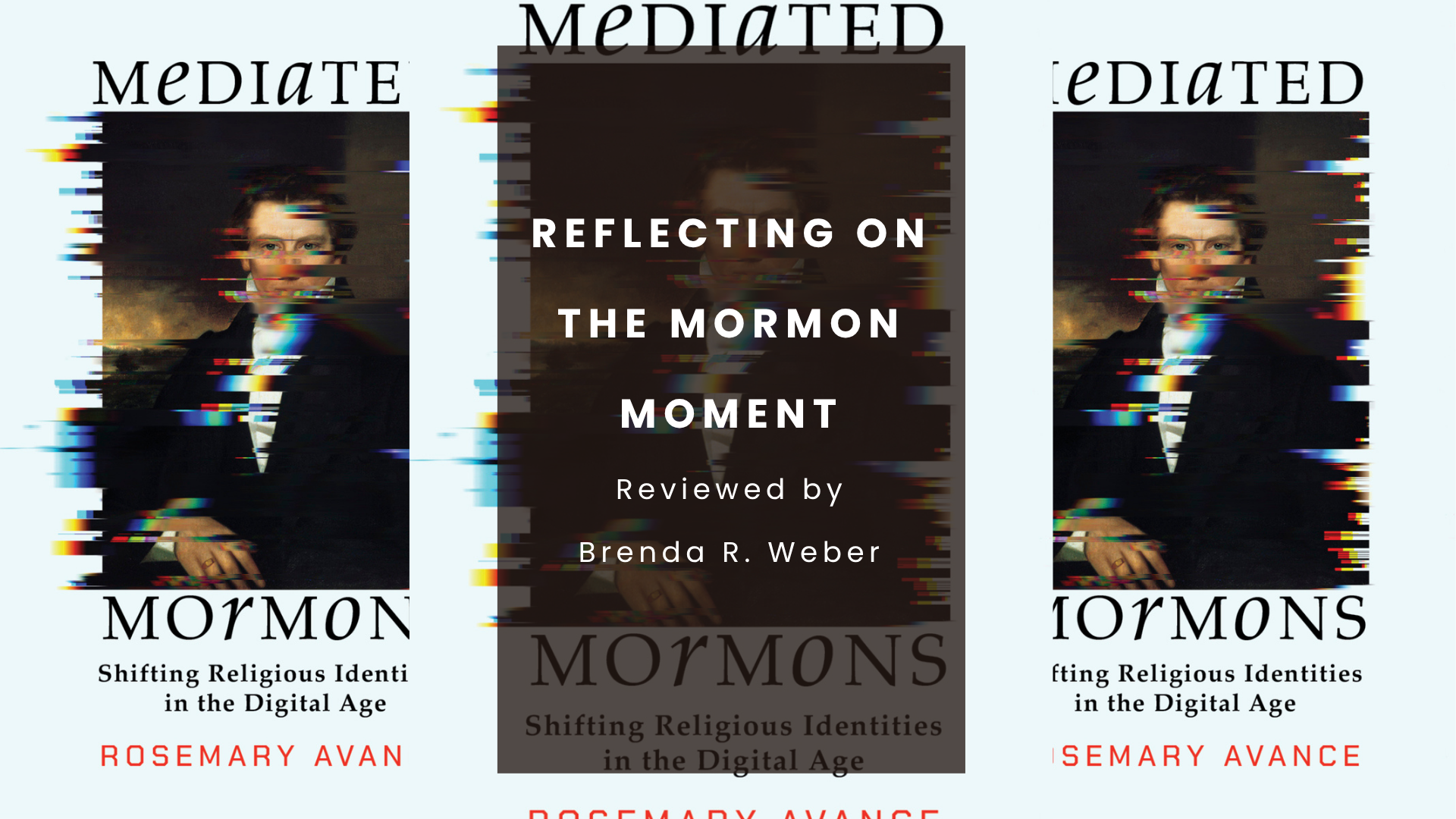
Mediated Mormons: Shifting Religious Identities in the Digital Age is a thoughtful consideration of both the practices and belief systems of the Church of Jesus Christ of Latter-day Saints—colloquially referred to as Mormons—and the religious…

Rebecca L. Davis’s book Fierce Desires: A New History of Sex and Sexuality in America asks as its animating question, how have Americans valued, expressed, and contained their desires over the course of American history? The first comprehensive history of sexuality published in over thirty years, Davis’s book applies new paradigms and conceptions of the relationship between sex, gender, and sexuality to show that neither sexuality nor sexual identities are unchanging facts—they have a history we can and must learn from if we are to solve some of today’s most vexing sexual concerns.

I got the book and felt both the chill of skepticism and a flash of jubilation—mostly at the derring-do of my old friend University of Illinois Press. I was eager to pat the acquisition editors on the back. Could I do the same for the author?

It has been a little over twenty-five years since In Sacred Loneliness: The Plural Wives of Joseph Smith was published, in late 1997. After publishing my book, I hoped that additional primary documents would surface that would deepen our understanding of Nauvoo polygamy and the women involved in it. A number of significant and interesting sources have indeed emerged. While none of these documents has caused me to change my basic interpretations of the subject, several have added important detail, clarification, corroboration, or complexity to the historical record. In this essay, I highlight and briefly discuss those “new” primary documents that seem most important to me, with particular attention to what they contribute to our understanding beyond what was available in the mid-1990s.

The atonement of Jesus Christ is accepted in the Church of Jesus Christ of Latter-Day Saints (LDS) as the central tenet of the gospel and the most important event in human history. However, the Church has not endorsed or adopted any specific atonement model as official doctrine. Instead, perhaps recognizing the value of diverse imagery, Church leaders accept and use concepts from many different models and generally discuss Christ’s atonement more in terms of metaphor than theory.