

 Back to full Issue

Articles/Essays – Volume 59, No. 3
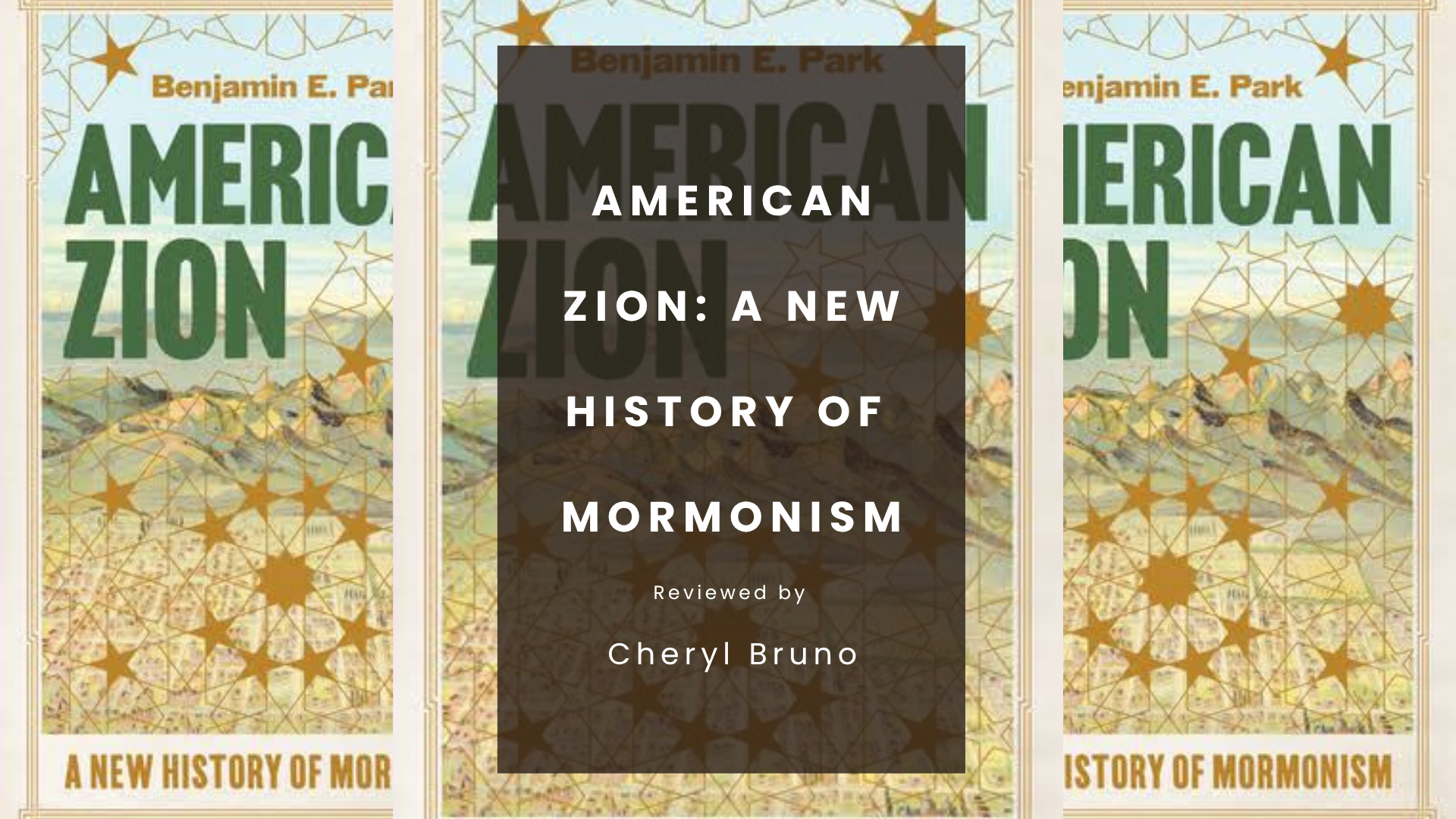
Narrating Mormonism: Perspectives on the American Chronicle | Benjamin E. Park, American Zion: A New History of Mormonism
From its early beginnings in the nineteenth century to its influence on contemporary landscapes, Mormonism has played a significant role in shaping American history. By examining the historical trajectory of Mormonism alongside key events in American history, American Zion: A New History of Mormonism offers valuable insights into the intersections of religion, politics, and society. This perspective helps readers contextualize current debates and challenges facing both Mormon communities and American society as a whole.
In a scholarly but accessible style, author Benjamin E. Park embarks on an exploration of the Mormon experience in America, each chapter focusing on pivotal periods in both Mormon and American history. US Americans will particularly appreciate this fast-paced romp through this homegrown religion, as their history gallops through a mere four hundred years at a breakneck pace.
At his many promotional book tour appearances, Park has expressed discomfort with how tersely he was forced to synopsize the history of Mormonism. The book is a synthesis of the whole of Mormon history, and it’s true that many threads had to be trimmed. Each reader will likely feel some dismay that some of their favorite events are missing. To make up for this lack, Park employs a narrative-driven approach that brings the history of Mormonism to life with vivid storytelling and engaging anecdotes.
With his introductory chapter, “Faith and History,” the author sets the stage by asking “who should or can narrate the church’s past.” Park places himself in the midst of the tension between authoritative, devotional, and scholarly historians of the past. With a bit of hubris, he legitimizes his book as the first “since the so-called Mormon moment [in 2012] to tell the history of Mormonism,” drawing from “a generation of new scholarship that has excavated lost voices and reconstructed forgotten alternative trajectories” (5).
Let’s see how well he accomplishes the task. Park’s chapters delve into specific epochs, such as “A Visionary Nation, 1775–1830,” which illuminates the emergence of Mormonism against the backdrop of a nation grappling with its own identity and destiny. Here, he spotlights “frustrated religious seeker” Lucy Mack Smith, a woman “emblematic of that culture” and the religious awakening that “begat the nation’s preeminent prophet,” her son (13). Twenty-seven of Park’s ninety-four footnotes for this chapter include her roughly 175-year-old history, Lucy’s Book.[1] A scholarly edition of this memoir has been widely available since 2001. Though not “new scholarship,” Park is justified for centering this source, since it comprises one of the few sympathetic insider views of this time period and forefronts a female standpoint. As he did in his previous book, Kingdom of Nauvoo, Park is careful to highlight women’s voices throughout the book, a tricky task in such a patriarchal religion.
Chapters entitled “The Voice of the People, 1831–46” and “Of Empires and Wars, 1846–69” provide narratives of Mormon migration, persecution, and eventual settlement in the American West, highlighting the tensions between religious autonomy and federal authority. “Mormons both fled from and worked within America’s colonizing impulse” of Manifest Destiny, Park explains. He describes the exodus from Illinois through the eyes of seven-year-old Joseph F. Smith, who “forever remembered cannon fire being the last thing he heard in the city of his childhood, a sound he permanently associated with the lie of America’s religious liberty” (86, 88).
As the narrative progresses, Park deftly navigates through periods of social change and upheaval in chapters like “The Boundaries of Citizenship, 1870–90” and “The Perils of Reform, 1920–45,” offering keen insights into the complexities of Mormon engagement with broader American society. The nation was especially perplexed by Utah’s juxtaposition of patriarchal theocracy and polygamy, on the one hand, and the granting of female suffrage on the other. “Utah is a land of marvels,” Park quotes one newspaper as saying. “Was there ever a greater anomaly known in the history of society?” (131). Suffragists at the national level “simultaneously praised and pitied” Mormon women, the first in the U.S. to vote at a municipal election (132).
One of the book’s strengths lies in its balanced portrayal of Mormonism, encompassing both its triumphs and challenges. From the optimism of “A Period of Progress, 1890–1920” to the introspection of “Fault Lines, 1970–95,” the author skillfully captures the dynamic interplay between tradition and modernity within the Mormon community. Reading his treatment of the evolution debate among the leadership of the Church was especially moving.
Likewise, American Zion does not shy away from addressing controversial topics such as gender roles, race relations, and the LGBTQ+ rights movement, as evidenced in chapters like “One Family Under God, 1945–70” and “Showtime, 1995–2012.” Born in 1959, I lived many of these events within the Mormon church and was astonished by how well Park captured the mood and complexities of being a committed member at the time. In these two chapters, Park shows his chops as a specialist in political and intellectual history and theology.
Throughout the book, and true to his promise, Park employs an array of primary sources and works by noted historians, including many women. He additionally draws upon records of prominent leaders whose papers have recently become accessible, such as Joseph Smith, George Q. Cannon, Eliza R. Snow, Emmeline B. Wells, Amy Brown Lyman, David O. McKay, Spencer W. Kimball, and Leonard J. Arrington. In the final chapters, “Latter-day Legacies, 2012–Present” and “Longing for Zion,” Park brings the narrative full circle, reflecting on the enduring legacy of Mormonism in the contemporary milieu and exploring both the opportunities and challenges that lie ahead. In its rich exploration of Mormonism’s relationship with American history, American Zion leaves readers with a profound understanding of the fascinating interplay between this uniquely American faith tradition and the nation’s social, political, and cultural fabric.
Benjamin E. Park. American Zion: A New History of Mormonism. Liveright Publishing Corporation, 2024. 421 pp. Hardcover: $35.00. ISBN: 978–1631498657.
[1] Lucy’s dictated memoir, in several versions, was restored in Lavina Fielding Anderson, ed., Lucy’s Book: Critical Edition of Lucy Mack Smith’s Family Memoir (Signature Books, 2001). This edition was used in Dr. Park’s work.