

 Back to full Issue

Articles/Essays – Volume 54, No. 4
Roots and Responsibilities
A few years ago, I had the opportunity to take a seminar from a professor at my university in the Native American and Indigenous Studies Department, focused on religious and/or spiritual traditions, belief systems, and worldviews of Native American and Indigenous peoples in the Americas. As part of that course, one of our assignments was to reflect on the course materials and to express what the texts had meant to us, and what they had led us to think about and consider. In a book I read in this class and some others, Anishinaabe Ways of Knowing and Being, Lawrence Gross explains how he tells his students, when they consider a religious tradition, to think about what kind of human beings the given tradition is trying to create.[1] This was something I kept coming back to during that class and since then. What kind of human beings do different worldviews try to create?
In the many worldviews we discussed in class, knowledge and wisdom are continually based in space and place. This wisdom is passed on through storytelling, through repetition, so that the next generation can become rooted.[2]
The readings in this class encouraged me to self-reflect. Am I rooted? And if I am, what am I rooted in? What space and place? When I took that class, the place I was rooted in was the land that is the home of Patwin people in what is known as Northern California. This place impacted what I learned in my PhD program and what my scholarship would look like. But I have other roots as well.
My sister is a printmaker. A few years ago, she made a print showing various root vegetables, including carrots, beets, and radishes, with the words “love your roots” carved above. Of course she was playing on words here. She is a gardener. But I can also consider a bigger meaning from this. Do I love my roots? My history? My family history? What do I love, and what do I not? Am I truly myself with others?
Along with rootedness, what am I reaching for? What type of world am I wanting to help perpetuate? What communities am I a part of, since it is in community that strength can come? Learning comes in the walking together; it comes in the connections we make.
So, what are my roots? I am the descendent of white Mormon settlers who came to the United States in the late nineteenth and early twentieth centuries. My ancestors were settlers who lived on Native lands throughout the North American West, particularly Shoshone, Paiute, Goshute, and Ute lands. I have women in my ancestry who joined the Church because of the hymn “O My Father.” There are some women who participated in polygamy, and others who apparently threatened their husbands with axes if they took other wives. I have ancestors who participated in missionizing efforts in the United States and in the Pacific. That past informs who I am and how I approach my scholarship. I come from a family that is more liberal in its understandings of Mormonism but certainly still has its flaws and shortcomings, as any family does. I carry my family with me in my name. I am named after one of my grandmothers, which has certainly made me remember her, her works, and her words of caution as I pursued my graduate studies. This legacy has impacted what I study. I particularly want to reflect on my grandmother’s life and experiences and how she has influenced me.

Figure 1. Charlotte and Eugene England arriving for their mission in Sāmoa, 1954. Courtesy Charlotte England.
My grandmother, Charlotte Hawkins England, grew up in Iowa and in Salt Lake City. In 1954, when my grandmother was twenty and a newlywed, she went with my grandfather, Gene, on a mission to Sāmoa. This was certainly more uncommon as a practice by the 1950s. They were called in particular to teach school in the village of Vaiola for the first part of their mission, were then separated and put with different companions in various districts for a bit, and then worked together again teaching school. I recently read through their mission journal. It was an interesting practice, reading their mission journal with the critical eye I might use when I read other mission journals for my scholarship. They used the same book to journal in, with my grandmother using the pages on the left, my grandfather the pages on the right. It was particularly eye-opening to me to read their words from when they were only twenty and see their thought processes, their personalities, and their frustrations. And I particularly enjoyed the various drawings my grandmother made throughout the journal pages, from images of large waves crashing on the shore to a sketch of the full moon to diagrams showing the layout of certain events and gatherings.
They talked about how troubled they were with how Tagata Sāmoa (Native Samoans) were treated by other missionaries as less than and as servants. They tried to teach love and be good examples. Their mission helped them both realize that they loved teaching. Some missionaries kept trying to treat my grandmother as if she was just their cook and cleaning lady and did not always see her as a real missionary. She would try to call these missionaries out for their behavior and stand up for herself, being the only woman there, but she did not always succeed. She got pregnant one year into her mission and was transferred to Hawai‘i so she could have access to better medical care at the end of that pregnancy, which meant she did not die in childbirth in 1956.
They also had their own biases that emerge in their writings, and I could see how they struggled with those. They made assumptions about the nature of the Pacific Islands and expressed fascination with a place and people so different from what they knew at home. At times they recognized this and tried to acknowledge it. Other times, they did not. I continued to think about the legacies of colonialism as well, including the fact that they were even in Sāmoa on a mission, showing the roots of US imperialism and Mormon participation in those efforts. In my dissertation I have considered the importance of schools started by white Mormons in the Pacific, from Hawai‘i in the 1850s to Aotearoa (New Zealand) in the 1880s and Sāmoa in the 1890s, and the use of such schools by missionaries to help strengthen their connections with the US consulate and reinforce the image of themselves as Americans. And here in my grandparents’ journal I can see the successors to that practice. They talked about making lesson plans and included details about teaching these Tagata Sāmoa children particular manners and dances, teaching European fairy tales, teaching them songs in English, teaching them sewing, and teaching them many other Anglo-American-centric practices.
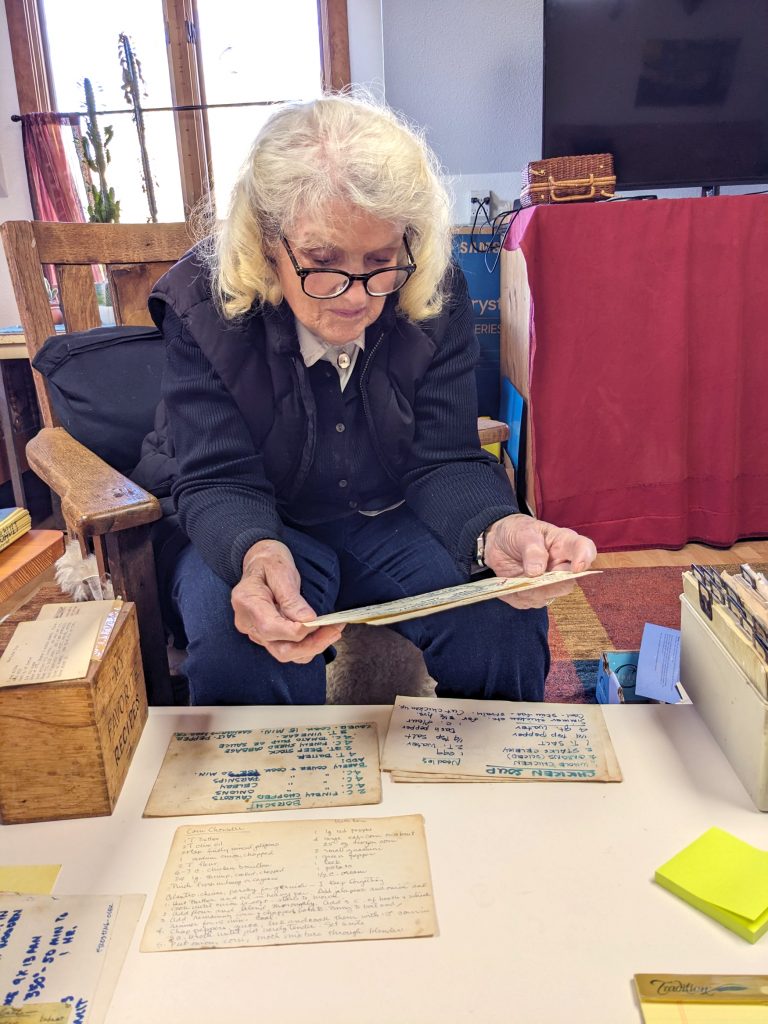
Figure 2. Charlotte England organizing her files and recipes, 2023. Courtesy Charlotte Hansen Terry.
Growing up, I knew the general details about my grandparents’ lives after their mission: coming home, moving to various places in the United States for school and jobs, starting Dialogue while they were in California, eventually ending up in Utah, my grandfather teaching at Brigham Young University and having to “retire” early from teaching there during the 1990s, and my grandfather finishing his career at what was then Utah Valley State College. Very often as a child, I learned more about my grandfather’s work and writings, about his thoughts on particular topics. After his death in 2001, when I was fifteen, there became even more of an emphasis and encouragement for me to read what he wrote, to remember his life. Very often this focus on my grandfather meant that my grandmother and her thoughts and ideas have not always been the focus, even though my grandmother has always been a larger part of my life, the one I have felt closer to, the one I spent more time with, and the person I have always felt a special bond with.
As an adult, I have had the chance to have more in-depth conversations with my grandmother about her experiences. I think much of this has become possible because of the frequent trips I made to her home when I lived in Utah to help her organize her papers. When I have not lived in the state, she always asks when I will be coming to Utah so she can have me work with her for a day and go through papers more or help organize and edit her writings about her life. We have continued reorganizing her papers and files, and with each reorganization I have had the chance to ask her questions about different parts of her life. As I have helped edit some of her writings more recently, I have been able to learn more intimate details about her and what has mattered to her. And I think my own studies during my master’s degree, as I took more women’s history courses, researched and read women’s diaries, and looked at the position of women in the Church, meant I approached these conversations with my grandmother from a different position.
I have had conversations with my grandmother about her experiences as a woman in the Church, the labor she has performed in church that often goes unrecognized, and the frustrations she has had about women’s position within the faith. I see how she is treated by family at times as not important, and that her opinions don’t matter as much as her spouse, who has been gone now for almost twenty-five years, and this has all led me to think more deeply about the gendered dynamic of scholarship within Mormonism.
My grandfather is known for his teaching and scholarship—scholarship that has certainly impacted me and how I think. My grandmother is known for being there at his side, being part of the conversations, welcoming people into her home, making lovely meals, especially her bread and ice cream. Of course, his scholarship and who he was was not possible without her. Without her work balancing the household, raising six children, bouncing off ideas with him and pushing him further in his conceptions he wouldn’t be the man whom so many respected. And she was there having her faith challenged, too, as the behavior of people in positions of power in the Church hurt her as well, and she saw contradictions between this behavior and the principles she believed in. People questioned her about why she remained in the Church with all that happened. She wrote about fifteen years ago about how “such an action would mean abandoning our core beliefs, which were too deeply embedded for us to forsake.”[3]
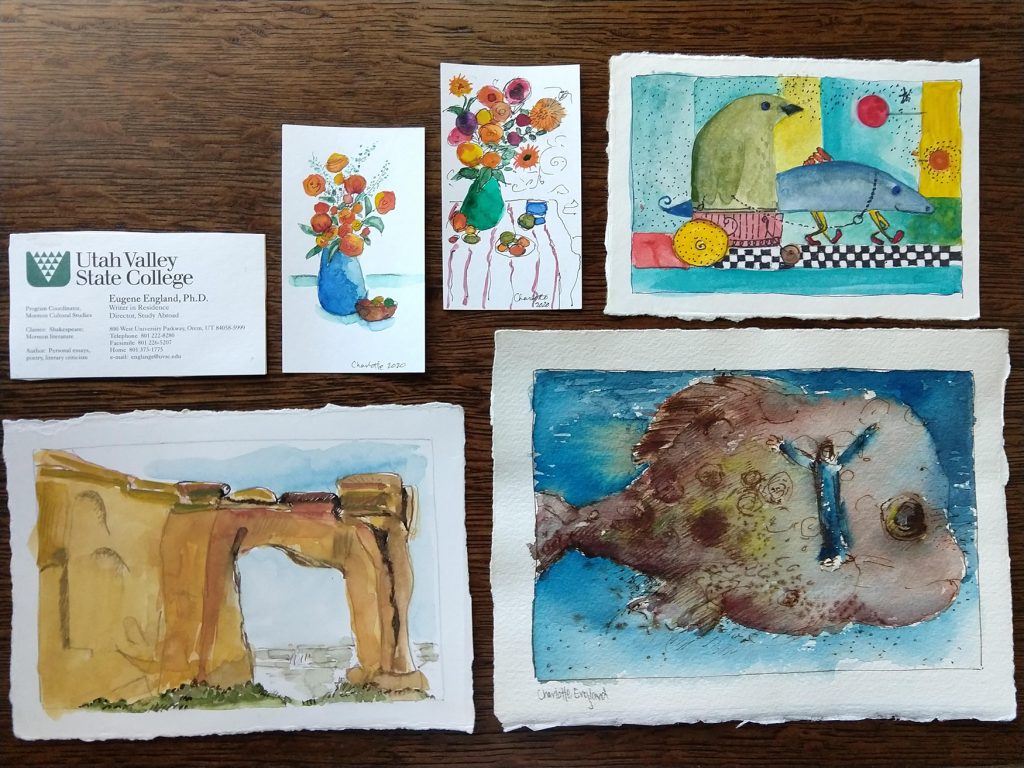
Figure 3. Charlotte England drawings, 2021. Courtesy Charlotte Hansen Terry.
She often even downplays herself and her life as she tries to emphasize my grandfather’s writings and work. Each Christmas for a few years she would call me and ask for my opinion on which of my grandfather’s essays she should print off and share with all my cousins. Most of that side of my family no longer attends church, and I would say almost all my cousins do not see themselves as members of the Church. Many of my cousins were young when my grandfather died, so he is a more distant memory. But we all feel very close to my grandmother. I have recently started to encourage her to also share some of her own writings about her life with her grandchildren, insisting that we all want to learn more about her, too, and hear more of her thoughts and experiences. We want her recipes, her artwork, and more of her in our lives. She luckily has started to do that, printing off drafts of papers she is writing, sending us little watercolors in the mail, some of them on the back of my grandfather’s old business cards. Recently we worked to collect some of her recipes and shared those with everyone for Christmas, to the delight of many of my cousins. And hopefully I can eventually convince her to share her writings with all her grandchildren. For now, I feel lucky to be trusted with them, with her thoughts and feelings that she is hesitant for all to know.
During my master’s program at the University of Utah, I was in a research seminar on US colonialism and needed to pick a paper topic. Since I had grown up hearing about my grandparents serving a mission in Sāmoa, I became curious about when the United States got involved in Sāmoa and when Mormons showed up there, so I looked it up and saw that it was close to the same time, in the 1870s and 1880s. This led to me doing a research paper to consider this conjunction and what it meant. I do not think I would have even considered going in that direction for a paper without knowing about my grandparents. As I write this piece, I am completing my PhD in history, where I explore white and Pacific Islander Mormon attempts to define and expand racial, religious, familial, and national belonging, informed both by my history classes but also by my classes in Native American and Indigenous studies. As I have worked on this dissertation, I have needed to consider what questions and topics I can look at and which ones I should not because of my positionality and privilege as a white woman. While I have done my historical research on an earlier period in the nineteenth century, I also continue to think back, especially recently, on my grandmother’s experiences in Sāmoa in the 1950s, how it changed her, and how she also participated in US colonialism through her missionary work. During my dissertation work, I have read many missionary diaries, seen the artifacts they brought back from their missions and the photographs they took with people in the Pacific. I have thought of parallels with my own grandmother when she reopened her mission trunk after not doing so for about fifty years, and I saw her lay down items, including tapa cloth gifted to her on her mission, now with significant creases from being folded for decades. This period of her life from so long ago still had such an impact on her present moment, and she spoke about all these items, refamiliarizing herself with these artifacts of her youth after they had been shut away for so long.
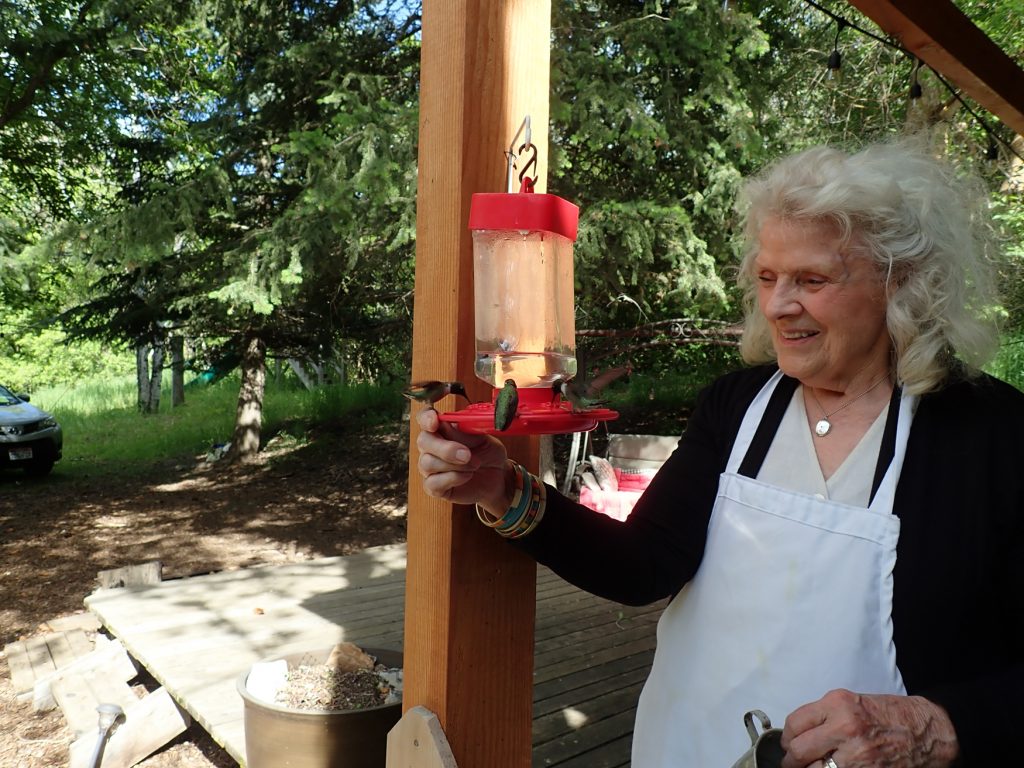
Figure 4. Charlotte England at her cabin in Provo Canyon, Utah, 2019. Courtesy Charlotte Hansen Terry.
When I told my grandmother I was considering getting a PhD, she was very serious with me on the phone. She told me to keep in mind how much doing that work can impact your family and how it will affect your husband and your relationship. It is not easy, she said. It takes both of you to get through that. And as she said that, I thought back to what it must have been like for her as a Mormon woman during the 1950s and ’60s. I am in a different place as her granddaughter. But I still have to grapple with particular gendered dynamics within my faith that might question why I went off to pursue graduate work, with my husband putting his career on a slower trajectory as he followed me to a new location.
Being named for my grandmother, and looking a good deal like her, does not mean I will make the same decisions she made or think the same things she does. But I am rooted in her, and the rest of my family, and my past. Her deep desire to love and care for those around her, how she shares her love through food and enjoys sitting and chatting over a cup of tea, are definitely things I have picked up from her, too. And how she has loved her church and community while at the same time challenging it and disagreeing with positions has provided an important example for me.
I am rooted in that Mormon history. And I would not be where I am, studying what I am, having the questions I do about Mormon history, without that rootedness in my grandmother. As I consider what directions I might go with my scholarship and work as well as my place within my faith community, I continue to reflect on my responsibility in my scholarship to grapple with this family history and Mormon past. I can focus on loving fiercely and holding my faith accountable. But I also continue to grapple with these complex gendered and colonial legacies in which I am rooted.
[1] Lawrence W. Gross, Anishinaabe Ways of Knowing and Being (Farnham, UK: Ashgate Publishing Group, 2014), 238.
[2] Gross, Anishinaabe Ways of Knowing and Being, 164; Keith H. Basso, Wisdom Sits in Places: Landscape and Language Among the Western Apache (Albuquerque: University of New Mexico Press, 1996), 127.
[3] Charlotte England, “My Leaps of Faith,” in Robert A. Rees, ed., Why I Stay: The Challenges of Discipleship for Contemporary Mormons (Salt Lake City: Signature Books, 2011), 174.