

DiaBLOGue
Multiculturalism as Resistance: Latina Migrants Navigate U.S. Mormon Spaces
April 28, 2020Dialogue 53.1 (Spring 2020): 5–32
I cannot help but smile when she calls me hermana, her “sister.” Her reference to me signifies a dual meaning: I am not only like a family member to her, but additionally, the term hermana is used among Spanish-speaking members of the Church of Jesus Christ of Latter-day Saints (also known as Mormons) to signify solidarity and integration with one another.
Mormon Women Claiming Power
April 28, 2020As the editor of Exponent II, I have had innumerable Mormon men—progressive and orthodox—tell me that they would like to listen to women, but women just don’t step up and talk. From President Russell M.…

Dealing with Difficult Questions
January 24, 2020The stake presidency has asked the high council to address the topic “reduce and simplify our lives to minimize the commotion prophesied by the Lord.” I’ve felt impressed to talk about a different kind of com motion today, one that the Church and its members are facing in our information-saturated world, and a different kind of simplicity, one that is very elusive and that may take a lifetime to find. I hope you’ll forgive me for following a written text fairly closely, but I’m a writer, not a speaker, and because of the sensitive nature of the topic, I want to make sure I am as precise as possible.

Rare as a Five-Legged Jackrabbit | Roger Terry, Bruder: The Perplexingly Spiritual Life and Not Entirely Unexpected Death of a Mormon Missionary
January 24, 2020In November 1976, seventeen months into his Hamburg mission and 152 pages into his memoir about that mission, Bruder (i.e., Elder) Roger Terry and his companion bicycled into the German countryside, seeking a farmer who…
Lessons from Baltimore’s Black Mormon Matriarchs on Discovering God’s Compassion | Laura Rutter Strickling, On Fire in Baltimore: Black Mormon Women and Conversion in a Raging City
January 24, 2020“Dear God, Maybe you can give me a sign letting me know what is happening to me,” Alice Walker’s main character Celie writes at the start of The Color Purple.Similarly, Georgia, a real-life Black Mormon woman in current-day Baltimore stands up in testimony meeting with a written poem in hand:
Heavenly Father
I don’t understand
why my tears
fall on deaf ears.
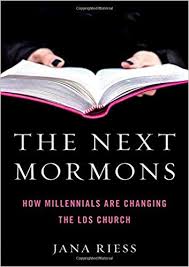
A Barometer for Mormon Social Science | Jana Riess, The Next Mormons: How Millennials Are Changing the LDS Church.
January 24, 2020Latter-day Saints studies has long remained the prerogative of scholars in the humanities, lacking commensurate scholarly attention in the social sciences. Periodically, however, a promising piece of social science research is promulgated by investigators seeking to understand the Mormon movement “on the ground.” Though usually insightful, these comparatively rare works vary with respect to ambition and sophistication.

Worthy of Their Hire? Mormon Leaders’ Relationship with Wealth | D. Michael Quinn, The Mormon Hierarchy: Wealth and Corporate Power
January 24, 2020Twenty-three years after Mormon Hierarchy: Origins of Power and twenty years after Mormon Hierarchy: Extensions of Power, the long-awaited third volume of D. Michael Quinn’s Mormon Hierarchy series extends his study of Latter-day Saint General Authorities…
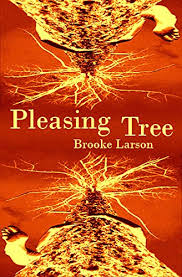
The “Blackblue Heartguts” of Trees | Brooke Larson, Pleasing Tree.
January 24, 2020Brooke Larson is a tree hugger—literally.
She hugs a female gingko in Central Park after pissing at its base. This reminds her of a tree she once hugged in Jerusalem. She walks tree to tree down sidewalks in Salt Lake City.
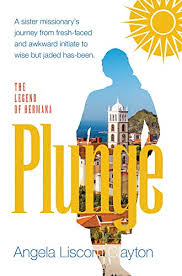
“I’m Not Shaving My Legs Until We Baptize!” | Angela Liscom Clayton, The Legend of Hermana Plunge
January 24, 2020Deep into the narrative and mission of The Legend of Hermana Plunge, a new memoir by Angela Liscom Clayton, in a chapter focused on the consistent catcalling and unwanted advances she faced as a missionary…