Lyric of the Larks
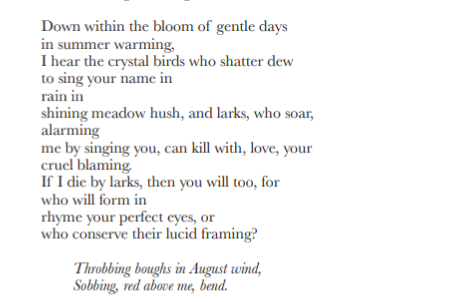
March 13, 2018 Sobbing boughs above me bend,
Throbbing red in August wind.


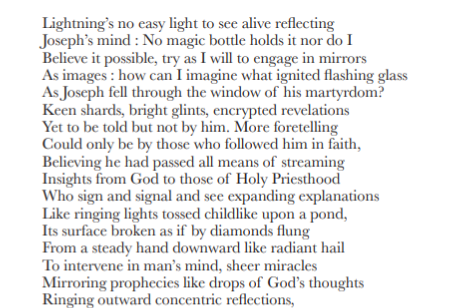
Sobbing boughs above me bend,
Throbbing red in August wind.
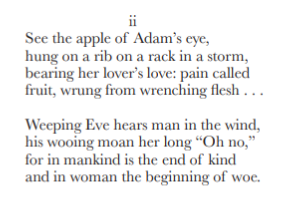
in mankind is the end of kind
in woman the beginning of woe
A child, a little girl of four,
a balled string of curiosity,
had to touch the canvas
Wild raspberry leaves had turned deep crimson and the stalks black.
For prayer I bowed in the field like one of the stalks, no less resigned.
Leaves of silver maple were shed and their underside had surrendered
to autumn mauve. In the eastern acre of the woods a sheet of yellow
Of the ocean what can we say? It is one pure cask,
and that immensely, of salted water to the brim.
Our lives turn such narrow slivers of consideration
by contrast, largely what the eye and ear scuttle
If the world were truly and wholly sullen,
the starlings would never sing—never.
They would see only blood in the clouds
of sunrise and sunset and hold their peace

God once asked a murderer about the location of his victim. The murderer evaded the question by posing another: “Am I my brother’s keeper?”

In his book The Omnivore’s Dilemma: A Natural History of Four Meals, Michael Pollan identifies major problems caused by the recently emergent food industry and the negative effects they have on the health and wellbeing of individuals, communities, and the environments. Pollan’s observations mirror those of American poet-prophet Wendell Berry. Both highlight losses associated with the demise of independent, small-farm agricultures. Here, I suggest that the Mormon ethic of food in its ideal (if not lived) form beautifully, simply, and powerfully restores what is lost.

In 1842, Joseph Smith wrote a letter to John Wentworth, editor of the Chicago Democrat, outlining “the rise, progress, persecution, and faith of the Latter-day Saints.”That letter concluded with thirteen “Articles of Faith” that were later published in the Nauvoo Times and Seasons. In a general conference of the Church in Salt Lake City in 1880, these articles of faith were canonized as scripture for members of the Church of Jesus Christ of Latter-day Saints.

Nearly thirty-five years ago, Merrill Bradshaw wrote: “It seems almost unbelievable that after all these years of the development of Mormon thought we still have no genuine Mormon aesthetic theory.”Such a statement might initially strike the reader as a bit out of date considering the abundance of writing on Mormon aesthetics since Bradshaw penned those words.However, that very abundance illustrates the existence of an ongoing conversation about Mormon aesthetics that reflects the difficulty Bradshaw mentions.