Divertissement
March 14, 2018His death being end-stopped
never justifies
the enjambment
of my survival
that goes on and on,


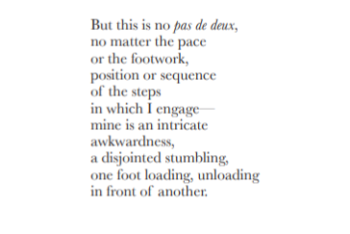
His death being end-stopped
never justifies
the enjambment
of my survival
that goes on and on,
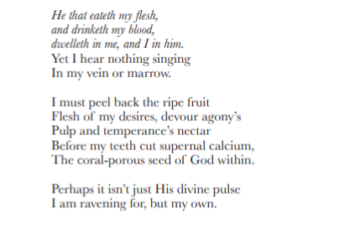
I want to eat God, limb and line.
Each yellowing ivory Bible verse
Every sacrament of soft white
Bread and cool waters,
All of Him in a single bite.
Like Eve, I won’t even leave the core.
Across the field, a partial hedgeline planted
three hundred years ago still winds its way
between an ancient English oak and plum.
At sunset, their silhouettes turn granite-gray,

So there’s my sort-of-neighbor big Bo, who despite owning two rock-solid Scandinavian names including, yes, Bo, doesn’t exactly seem to have things rock-solidly together.
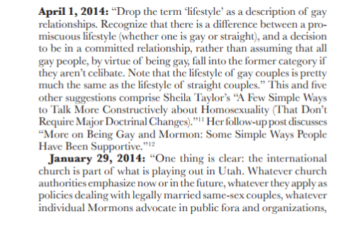
Over ten years ago, blogs changed the look, feel, and immediacy of Mormon discourse almost overnight. The ongoing lively conversations, brilliantly constructed posts, and sometimes even unruly debates have not stopped since. Dialogue both views and participates in this online dialogue, submitting archival references to current discussions and writing pieces in concert with the printed prose found within its present-day pages.
The First Vision, that seminal event which has inspired and intrigued all of us for nearly two centuries, came into sharp focus again in 2012 when another volume of the prestigious Joseph Smith Papers was published. Highlighting the volume is the earliest known description of what transpired during the “boy’s first uttered prayer”near his home in Palmyra in 1820. The narrative was written by Joseph Smith with his own pen in a ledger book in 1832.
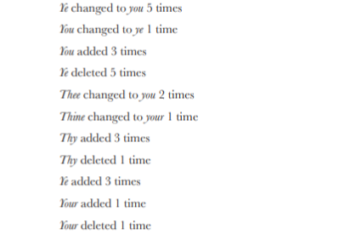
What shall we do with thou? If this question grates on your ear, it may be because you recognize that thou is a nominative pronoun (a subject) and therefore never follows a preposition. If it doesn’t grate, then you are living, breathing evidence of the difficulties presented by archaic second-person pronouns in twenty-first-century Mormonism.
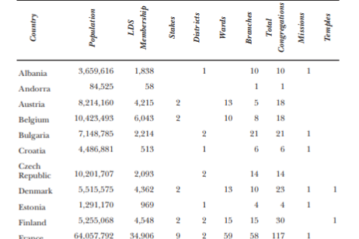
Almost two decades have elapsed since I published The Angel and the Beehive: The Mormon Struggle with Assimilation (Urbana: University of Illinois Press, 1994). My book began by acknowledging and illustrating the “Americanization” thesis advanced by others— namely that the LDS Church and religion had spent the first half of the twentieth century in a deliberate policy of assimilation with American society and was thus following the time-honored trajectory traced by such early scholars as Ernst Troeltsch and Max Weber—from a peculiar and disreputable sect toward a respectable church, increasingly comfortable with the surrounding American culture.

Ryan T. Cruger, “Apostates,” “Anti-Mormons,” and Other Problems in Seth Payne’s “Ex-Mormon Narratives and Pastoral Apologetics”
Seth Payne, Response
When my parents died, I inherited our family’s Buddhist altar, or butsudan. It now sits in my living room in Lexington, Massachusetts. I pray before it about twice a month. I burn a stick of incense and ring a small brass bell. I close my eyes, and thank my ancestors for what they have given me. Usually, I do this with my youngest son, Kan, who is now three years old.