Easter
March 15, 2018My grandson, ten,
hates the rain,
as he does this Sunday morning
when dark clouds bring the sky down.


My grandson, ten,
hates the rain,
as he does this Sunday morning
when dark clouds bring the sky down.
Precious few Americans outside the South know much about my church—the Church of Christ—and that’s a shame, since it illumines so well the character of the American nation. Because my church is relatively small (c.…
There is a growing recognition among scholars that museums are discursively constructed sites. One scholar noted that museums often are merely a “structured sample of reality” where science empowers their message. Alternatively, museums might encourage a pseudo-religious experience of ritually “attending” them— factors, some critics observe, that reduce the probability of resistant readings by patrons.
Early Mormonism was thoroughly premillennial. The saints watched for latter-day signs of the times in anticipation of Jesus Christ’s imminent return, spoke of them in sermons, and published them in newspapers. The righteous would reign for one thousand years while the wicked would be swept off the earth to await their resurrection and judgment. Mormon missionaries urgently preached that God was gathering his elect before Christ’s coming in the clouds—a priority that overshadowed a salvation to-heaven-or-damnation-to-hell eschatology in Mormon discourse of the period. Latter-day Saint views of the very nature of eternal post-mortality, which to the present are considered a distinctive aspect of Mormon belief, developed out of their anticipation of Christ’s millennial reign.
Dialogue 46.2 (Spring 2016): 1–39
Blythe shows the denial among Culterites followers that the founder was involved in plural marriage.
In our Spring issue, we mistakenly omitted Terence L. Day’s biographical note. Our sincerest apologies.
There was also a mistake in the printing of James Goldberg’s poem, “The Feather Pen.”

In the months after September 11, 2001, essayist and poet Frederick Turner crafted an unpublished tale entitled “The Terrorist Goes to Paradise.”
Told in the first person by the terrorist himself, the story recounts the glories and privileges that greet an operative who helped fly a jet into New York’s towering World Trade Center. Upon his arrival in heaven the terrorist discovers to his pleasure that, for his heroism, as he presumes, Allah has provided him with all his fantasies and more: movement without restriction, un encumbered by time; scenes of beauty surpassing mortal ability to express; seventy-two voluptuous virgins enacting without restraint his every whim; infinite, incomparable food without satiation; a ministering angel attending to his every request and answering every query. It is all . . . heavenly.

“And thorns shall come up in her palaces, nettles and brambles in the fortresses thereof: and it shall be an habitation of dragons, and a court for owls.” Isaiah 34:13 “I will make a wailing…
Sociologist Karl Mannheim believed that knowledge is relational. Our social positions, like community affiliations or the roles we take in a group, shape and constrain what we know and how we know it. As members…
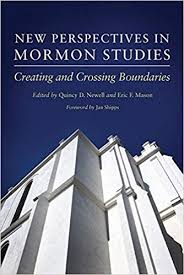
This is a book about boundaries: boundaries of belief, boundaries of discipline, and boundaries of methodology are all explored in various ways. How did Mormons challenge, create, and transgress boundaries of religion and culture? How…