DiaBLOGue

Why the True Church Cannot Be Perfect

In an August 2008 letter to Brigham Young University’s student newspaper, a disgruntled student (who believed campus Republicans were deflating his car tires because of his Obama bumper sticker) made this inadvertently revealing statement: “I do realize that although the church itself is perfect, the people in it are definitely not.”He was right about the members, of course, but his naïve assumption that the Church is perfect is as illuminating as it is pervasive among Latter-day Saints. It is also fundamentally inaccurate. Indeed, I suspect that this misconception lies at the heart of many of the struggles the Church and its members find themselves facing in our increasingly complex and information-saturated world. 
Bones Heal Faster: Spousal Abuse in the Church of Jesus Christ of Latter-day Saints

While I was serving as a stake high councillor, a Latter-day Saint woman confided in me, “Bones heal faster.” She spoke with the authority of a victim of both physical and emotional abuse. When I confidentially shared her comment with the director of a mental health clinic, he affirmed that many abused women would validate the woman’s statement.Popular opinion notwithstanding, verbal abuse is harder to live with than physical abuse, can be more op pressive than being beaten, and leaves deeper scars. 

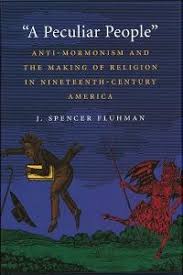
“And Now It Is the Mormons”: The Magazine Crusade against the Mormon Church, 1910–1911

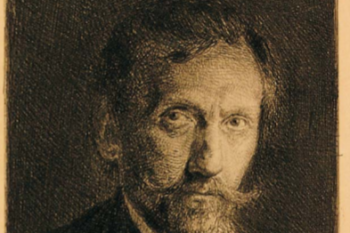
From September 1910 through August 1911, in an unusual confluence of focus, four popular national magazines critiqued the Mormon Church and its prophet in a series of articles that Mormon leader and historian B. H. Roberts characterized as the “magazine crusade” against the Church. All of the articles were written by prominent muckraking journalists who sought both to identify church practices that needed to be reformed and to sell magazines by presenting their critiques in a way that would appeal to Progressive America. The articles did, in fact, have at least two long-term effects on the Church: they accelerated the true demise of polygamy in the institutional Church by increasing the resolve of leaders to discipline prominent Church members who had insisted on continuing to encourage, perform, and enter into new plural unions, and they contributed to the Church’s development of effective strategies to defend itself against attack and its appreciation of the importance of competent public relations. The articles also had the shorter-term effect of re-igniting substantial anti-Mormon activity in the United States and Western Europe. 

Our Bickering Founding Fathers and Their Messy, Flawed, Divinely Inspired Constitution

We like to pretend that things were different back then, back when gods and giants roamed the earth. What would the likes of John Adams and Thomas Jefferson need with thirty-second attack ads? Would Alexander Hamilton haggle over a top marginal tax rate? Or would Benjamin Franklin try to filibuster a Supreme Court nominee? Certainly the idols of our tribe were above such nonsense. 

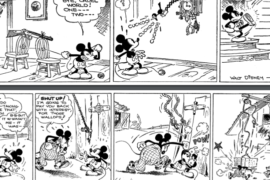
What if Mickey Mouse Isn’t Mormon? | Floyd Gottfredson, Walt Disney’s Mickey Mouse: “Race to Death Valley”

The 2010 videogame Epic Mickey, before its release, was looking to be one of the more controversial games of the year. And that’s without any sex or decapitation. What made it so controversial? Because its Mickey was a bit more adventurous and scrappy and dangerous than the carefully controlled Mickey Mouse that developed in the animated cartoons. But that Mickey was never the only Mickey—or even the original Mickey. 

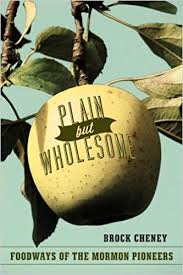
Toward a Mormon Culinary History | Brock Cheney, Plain but Wholesome: Foodways of the Mormon Pioneers

Brock Cheney’s history of Mormon food, Plain but Wholesome: Foodways of the Mormon Pioneers does much to fill a surprising lacuna in Mormon history. Although a number of books on food and religion exist,  there is little academic exploration of the role that food played in the shaping and development of Latter-day Saint culture. While Cheney’s work reads a bit like a church potluck, lacking the unity of a well-constructed menu, it nonetheless provides interested readers and academics alike with a variety of tempting morsels to inspire further exploration. 

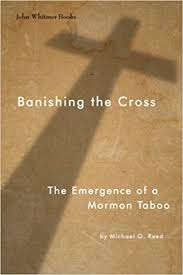
Rethinking the LDS Aversion to the Cross | Michael G. Reed, Banishing the Cross: The Emergence of a Mormon Taboo

Members of the Church of Jesus Christ of Latter-day Saints are often perplexed when they are accused of not being Christian. We worship Christ, acknowledge him as the divine Son of God, and believe our hope for salvation centers on the atonement made possible by his sacrifice. Christ is central in Mormon scripture: his birth, death, and atonement are foretold by Book of Mormon prophets, revealed through terrestrial signs, and revealed in the flesh in Christ’s ministry to his “lost sheep” of the New World. Mormons celebrate Christian holy days such as Easter and Christmas. The very name of the Church points to Christ as our center.

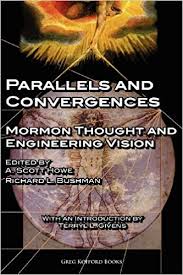
God as Engineer | A. Scott Howe and Richard L. Bushman, eds., Parallels and Convergences: Mormon Thought and Engineering Vision

Albert Einstein famously wrote: “I want to know how God created this world. I am not interested in this or that phenomenon, in the spectrum of this or that element. I want to know his thoughts. The rest are details.” Einstein did not believe in a personal God, of course, but A. Scott Howe and Richard L. Bushman do, and ask the same questions in their book, Parallels and Convergences: Mormon Thought and Engineering Vision. Written from the point of view of faithful LDS scientists and engineers, Bushman and Howe (an aerospace engineer at NASA’s Jet Propulsion Lab) attempt to tackle a question that has long fascinated me: what can we learn if we analyze God’s creations as the master work of the master Engineer?