Perplexed by the Revelator’s Heaven
March 16, 2018Aren’t leaves crumbling against the edge
of autumn, the fibrous tangle
of the lesser shrew’s heart, and a prophet curled
in the belly of night, shaking like a reed fragile enough?



Aren’t leaves crumbling against the edge
of autumn, the fibrous tangle
of the lesser shrew’s heart, and a prophet curled
in the belly of night, shaking like a reed fragile enough?

In my CD collection is a set of two semi-bootlegged discs, their cases held together with a rubber band, each marked La Pietà, 1/21/01 in permanent marker. The recording itself is perfectly legal; I arranged for it with an ebullient phone contact at NPR’s “Performance Today,” along with recordings of several other concerts on the “Chamber Music in Historic Sites” schedule that season. That I ended up with a copy of it is sheer luck, or divine intervention, or chutzpah. The music is a French-Canadian all-girl band, playing music written for young women, and it is my favorite CD.

They were wearing next to nothing. Thongs, boy-shorts, string bikinis. A lacy Victoria’s Secret red and black nightgown seemed downright conservative. Pro-gay slogans—“Marriage Equality!” and “Down with Prop 8!”—were plastered on chests, legs, butt cheeks, cheeks. “Judge not lest ye be judged” read one billboard/lower back, scrawled in what might have been red lipstick. Tattoo ink had rendered many of these mostly twenty- and thirty something-year-old bodies more permanent canvases.

Levi Savage Peterson, the beloved and controversial Mormon writer, throws a quietly skeptical glance over his menu in a posh Palo Alto nouveaux-Middle Eastern restaurant on a recent evening in early June 2011. My partner, Russell A. Berman, of Stanford University, president of the Modern Language Association, and I had invited Peterson to speak about his work and his contributions as a “literary intellectual” in the American public sphere.

Nine months after Joseph Smith and his brother were assassinated by an angry mob in June 1844, Parley P. Pratt published a proclamation addressed to the Church’s large and dispersed membership to assure them that all was well. In doing so, he sought to accomplish two things: first, to praise Smith’s legacy as the found ing prophet of a movement that had attracted thousands of converts on both sides of the Atlantic Ocean; and second, to insist on the necessity of the Quorum of the Twelve’s institutional leadership—a role that meant not only continuing, but fulfilling and ex tending, Smith’s religious vision. “The chaos of materials prepared by [Smith] must now be placed in order in the building,” he wrote. “The laws revealed by him must now be administered in all their strictness and beauty. The measure commenced by him must now be carried into successful operation.”

The Authorized (King James) Version of the Bible (KJV)has been the de facto English LDS Bible since the very beginning of the Restoration. The initial reason for this is simple: The KJV was the Bible of American Protestantism in the nineteenth century and was therefore Joseph Smith’s Bible. For example, Joseph Smith and Oliver Cowdery used an 1828 KJV to begin work on the Inspired Version of the Bible, known by Mormons as the “Joseph Smith Translation” (JST).
Not long ago I went out with the full-time elders and we taught a young mother who was quite interested in our message. In fact, she had been meeting with the missionaries for several weeks. When they referred to a biblical scripture and invited her to read along, she did so and then responded, “That’s not what it says in my Bible.” Even though she was a conservative Christian, from a Pentecostal background, she was using the New International Version (NIV). And it is not just that the words were different—most Christians are familiar with multiple versions of the Bi ble these days. The meanings did not match up. The elders were flustered, having no idea how to handle the situation, and they tried to move on to the next point as quickly as possible.
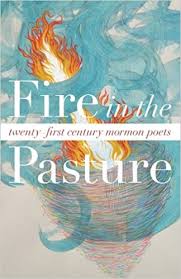
For me, poetry’s unique power is to hold in immediate suspension what we know and how we know it. Poets surpass philosophers in representing a harmonious tension of ontology and epistemology. We renew through the condensation of poetic language the feeling of knowing most authentically. The poems in Fire in the Pasture are not wanting. As a group of poems, Fire succeeds admirably in renewing our feelings of knowing.
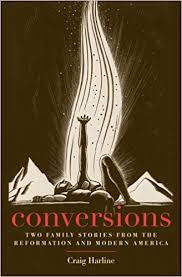
Craig Harline, professor of history at Brigham Young University, needs little introduction. His award-winning previous books on European religious history include The Burdens of Sister Margaret, A Bishop’s Tale, and Miracles at the Jesus Oak.…
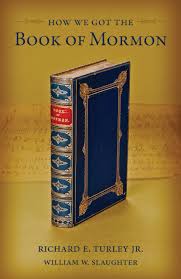
The appearance of Richard Turley and William Slaughter’s How We Got the Book of Mormon suggested that the volume’s intended audience might be investigators, new members and teens seeking to know more about the material…