Neshutan
March 19, 2018Impossible to tally,
The time that a stethoscope
Has draped about my father’s neck.
Years, I am sure.


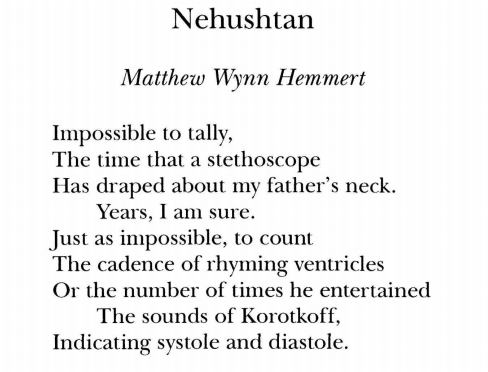
Impossible to tally,
The time that a stethoscope
Has draped about my father’s neck.
Years, I am sure.
At nineteen, a Mormon missionary in Brazil, I felt foreign in every part, torn from language. “Boy, it’s cold out,” I’d quip to the natives. “No, Elder, hot” they’d say. “The word is hot.” At…
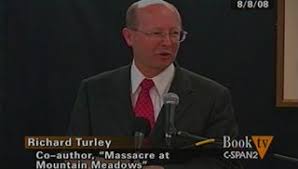
The publication of Massacre at Mountain Meadows (New York: Oxford University Press, 2008) by Glen M. Leonard, Richard E. Turley Jr., and Ronald W. Walker, a history of Mormonism’s darkest hour, is itself a history-making event. A scholarly discussion of their book and its significance in Mormon and Western studies was held at the Salt Lake Public Library on September 5, 2008, sponsored by the Charles Redd Center for Western History at Brigham Young University, the Mormon History Association, the Tanner Humanities Center at the University of Utah, the Tanner Center for Non-Violent Human Rights also at the University of Utah, and the Salt Lake City Public Library.
Establishing legitimacy is a fundamental process that is basic to social organization. All organizations intending to grow or continue to exist require widespread acceptance and some degree of congruence with the surrounding culture. In the months following the raid on the Fundamentalist Church of Jesus Christ of Latter Day Saints’ (FLDS) ranch in Texas, the Church of Jesus Christ of Latter-day Saints (LDS) began an initiative to distinguish itself from the many polygamous groups that have branched out of the Mormon trunk over the years.
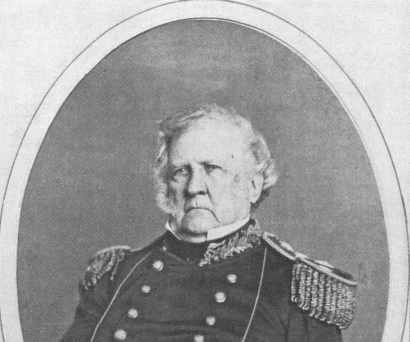
Many Utahns may call the Utah War of 1857-58 “Johnston’s Army,” but the U.S. Army and most historians surely do not. It seems to me that this shorthand label for the war trivializes, personalizes, and localizes it, much as the term “Seward’s Folly” was used to deride the secretary of state’s 1867 push to purchase Alaska. By focusing on Colonel Albert Sidney Johnston—or at least on his name—this label’s users have, in effect, taken his Utah War leadership for granted.” They should not . . .
On March 13, 1852, two men, one white and armed with a rifle, the other a Goshute armed with bow and arrows, confronted each other in the Stansbury Mountains west of Tooele, a small, two-year-old settlement some twenty-five miles southwest of Salt Lake City. The first man, Jacob Vernon Hamblin, a lieutenant in Utah’s Nauvoo Legion, had been given specific instructions by his military and ecclesiastical superior to kill all Indians, as they had been raiding the whites’ cattle. However, when Hamblin and the Goshute faced each other in the mountains, neither could kill the other despite multiple arrows loosed at Hamblin and multiple attempts to shoot the Indian. Finally the Indian fled after Hamblin threw a stone at him. This was a tense, dangerous, yet almost comic confrontation that would profoundly shape Hamblin’s subsequent life. He concluded that the incident was a sign given him from God that he should not kill Indians and that, if he followed this directive, he himself would never be killed by them.
Emily Plewe grew up in Centerville, Utah, and attended Wellesley College where she studied art and literature. She then pursued a master’s degree at BYU. Emily and her husband, John, who is also an artist…
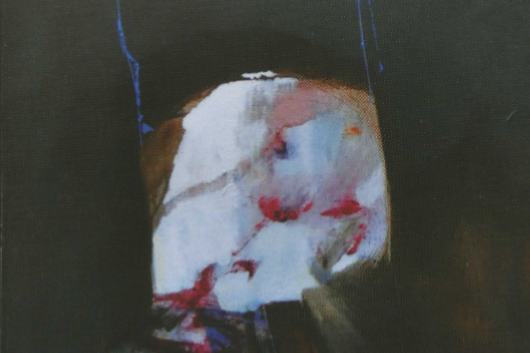
Here, the author of this letter instructs his readers to live a life of piety, or godliness. He explains that the power of God has given us all the tools we need to live this life, and that it is in this way that we participate in the divine nature. Then he outlines a set of practices including goodness or virtue, knowledge, self-control, endurance, mutual affection, and love. This is the path to becoming divine.
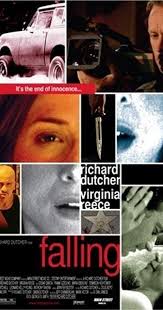
In Richard Dutcher’s latest film Falling, a rich scene revealing the subtle conflict between the demands of commerce and artistic endeavor is focused around the word marrow. The protagonist, lapsed Mormon Eric Boyle, a suffering videographer and aspiring screenwriter, is failing to sell his latest story to a well-tanned and successful Hollywood producer. After rejecting Eric’s work, the producer complains to him that if he wants to make it in the film business, he needs to do something different, something new.