Domlik
March 20, 2018Winter was Domlik’s best season. The New Year rains were the earth’s sweat; and when the soil perspired, the dirt softened into mud so thick it postponed all organized demining activity. Even the bravest deminer—by…



Winter was Domlik’s best season. The New Year rains were the earth’s sweat; and when the soil perspired, the dirt softened into mud so thick it postponed all organized demining activity. Even the bravest deminer—by…

After our two-day honeymoon in West Yellowstone, we move into this one-bedroom place above the Modern Plumbing & Heating building in Rigby. There’s a door right on Main Street that opens up to a barn-red…
Dialogue 41.2 (Summer 2009): 85–101
Hardy describes the long, difficult process of researching polygamy during a time that the church wasn’t open about polygamy.

I had never heard of fundamentalist Mormons until seeing a 60 Minutes segment about them in the late 1980s. During a western vacation, I visited Colorado City, Arizona, on January 2, 1988, and talked my way into some friendships which continue to this day. FLDS Prophet Warren Jeffs, his father Rulon Jeffs, former Colorado City mayor Dan Barlow, the late Owen Allred, and his successor LeMoine Jenson of the Apostolic United Brethhren (AUB) were among my acquaintances. I later earned a graduate degree in legal history, and my thesis concerned an important event in their experience. I have continued to study, visit, and write about the fundamentalist Mormon universe since then.
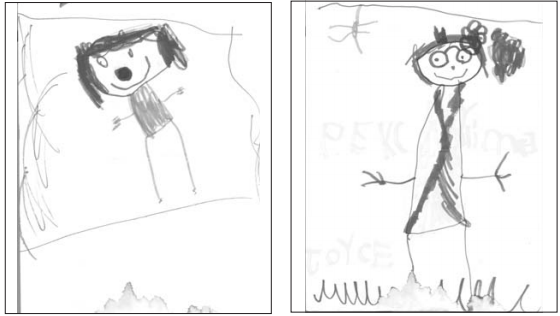
I sat in the bed facing the two smiling demons—leaders of the great Satan/Wal-Mart Organization that ran the hospital. They were trying to convince me that I should let them adopt a clone of my five-year-old daughter Emily. She had been created by new genetic techniques developed by their powerful company and they insisted, “Her place will be great in the new world order.” Over the last few days, however, they had lied to me so often I knew it was a sham. Despair seemed to overwhelm me at the thought of the strange global changes that had recently taken place under this evil organization’s machinations. But I was resolute. I would never let them have the copy of my daughter.
The study of churches and religious movements is especially prone to the issues of bias and selective presentation due to researcher position and organizational politics. Like many other religions, Mormonism as an object of study has not escaped this problem.

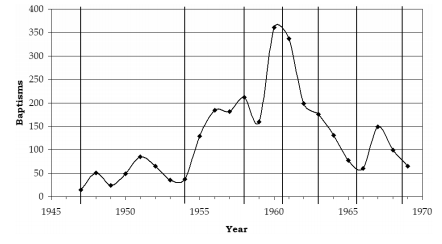
The Church of Jesus Christ of Latter-day Saints has experienced stable growth in Taiwan since the first four missionaries arrived in 1956. Even in recent years, when the growth of the Church has slowed considerably in many countries including those in East Asia, LDS growth in Taiwan remains robust. Thus, something distinctive characterizes Mormonism in Taiwan compared to Mormonism in neighboring countries. Some scholars have used diminishing growth rates in the past decade or two to argue that Mormonism remains marginal in many countries.

Gordon B. Hinckley remained a vital leader of the Church of Jesus Christ of Latter-day Saints until the very end of his illustrious and prophetic life. President Hinckley’s de facto guidance of the LDS church…


Sharon Alderman has been weaving cloth by hand since 1969, specializing in apparel fabrics, upholstery, and color studies. Her work has won many awards, and she lectures, gives keynote addresses, acts as a juror, and…