Salt Lake City Cemetary: Jewish Section
March 19, 2018Diaspora/diaspora
Ours in theirs,
Or theirs in ours?


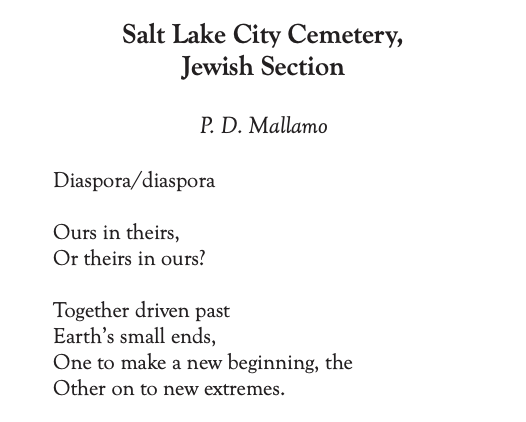
Diaspora/diaspora
Ours in theirs,
Or theirs in ours?

“How about a quick swim?” Carolyn asked, pointing to a lighted swimming pool glimmering through the fence of a large apartment complex on North Temple. Norman smiled and continued to drive. “I’m serious,” Carolyn said.…

Dialogue 41.4 (Winter 2008): 121–147
In this essay, I shall begin by describing what we can learn about our Mother in Heaven from the scriptures. I then will draw from those descriptions some (very modest) suggestions for how we might actually worship, or at least honor, Her in ways that should not be considered offensive or heterodox by traditionalists. This essay is therefore a little exercise in religion-making. It is my hope that I will be able to express my mediating thoughts in a way that will not be deemed offensive by those of either school of thought on the subject.
During a Sunday School class I was teaching, a question came up about the lineage of Mary, mother of Jesus. A knowledgeable and respected class member answered that Mary was a descendent of David. I observed that Mary’s genealogy is not given in the scriptures; and, therefore, it would not be unreasonable to hold another opinion or to keep an open mind on the question.
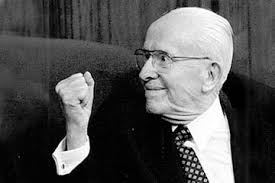
Any discussion of Ezra Taft Benson’s eight years as U.S. Secretary of Agriculture must include mention of his family, especially his wife, Flora, and his oldest son Reed, whom he credited as his most valued advisers. “It was Flora’s ideas and courage—her positive influence and determination— more than anything else,” Benson wrote in 1962, “which added steel to my spine to fight it out for principle against the nearly overwhelming pressures of political expediency.” Second only to Flora was Reed, twenty-four in late 1952, who, according to Benson, understood “more fully what I was trying to accomplish possibly better than anyone else. . . . He worked quietly and effectively behind the scenes on matters that were often of the utmost importance.”Benson’s wife and children not only provided love and support but also emerged in the national media as the public face of an idealized mid-twentieth-century American family—white, privileged, patriotic, with mother as homemaker, father as breadwinner, surrounded by attractive, well-mannered offspring.

It is not often that we see a convergence in predictions between apostles and sociologists, though, to be sure, this is not the first prediction from Rodney Stark that has proved pleasing to the LDS leadership. Yet, for today’s LDS members in Europe, the predicted “great days of gathering,” or, in President Hinckley’s terms, “second harvest,” must seem as far off as the Millennium itself. Certainly Stark’s earlier projections of enduring Church growth have proved rather optimistic for Europe, where the rate of new converts has barely kept pace with the defections. The seemingly static membership in western Europe is no secret, nor is the Church’s ongoing struggle with retention. Well-researched articles on such topics have been appearing for more than a decade, and a series of 2005 articles in the Salt Lake Tribune brought the problem forcibly to public attention.

Thomas G. Alexander, Faithful Historian Responds
Dan Vogel, What Is a Revival?
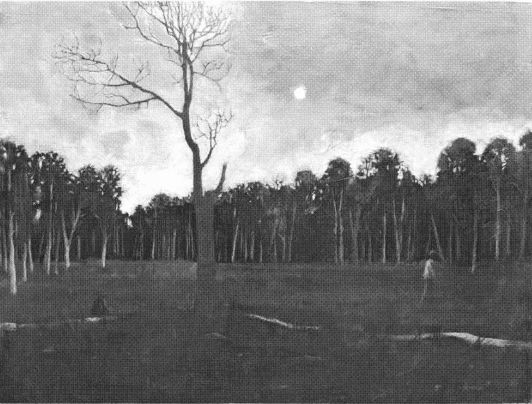
Nathan Florence is a Utah native who studied art at Swarthmore College in Philadelphia and at the International School of Art in Todi, Italy. He lives in Salt Lake City with his wife, Marian, and…
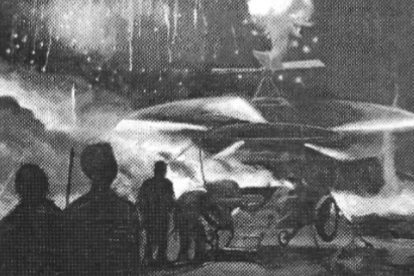
Dialogue Best of the Year awards are for contributions judged as superior in their respective categories: ARTICLE John-Charles Duffy, “Can Deconstruction Save the Day? ‘Faithful Scholarship’ and the Uses of Postmodernism” Spring issue, $300 award …
Lately, I have been thinking a lot about mortality—meetings and partings and human frailty. The poet Geoffrey Hill is retiring from teaching at Boston University this year, and a few weeks ago I heard that he had said life gets easier when you accept the fact that you live in a fallen world. Wilbur Jackson of our bishopric furthered the development of my thought on this topic during that wonderful fifth-Sunday April meeting when he reminded us that we’ve left Paradise. We’re not in Paradise; it’s gone, so we’re going to suffer, get sick, sin, and die. The important thing, Jackson reminded us, is to be on the right path so we can return to Paradise.