Pieta
April 5, 2018Lying on my mother’s bed
listening to tropical rain skitter
across a mottled screen,
I hold my daughter, sprawled in sleep,


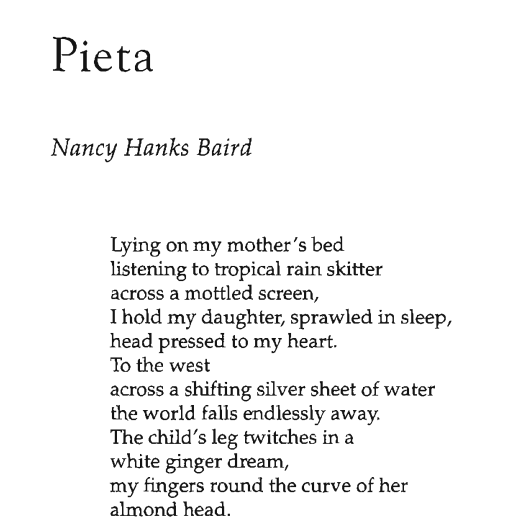
Lying on my mother’s bed
listening to tropical rain skitter
across a mottled screen,
I hold my daughter, sprawled in sleep,
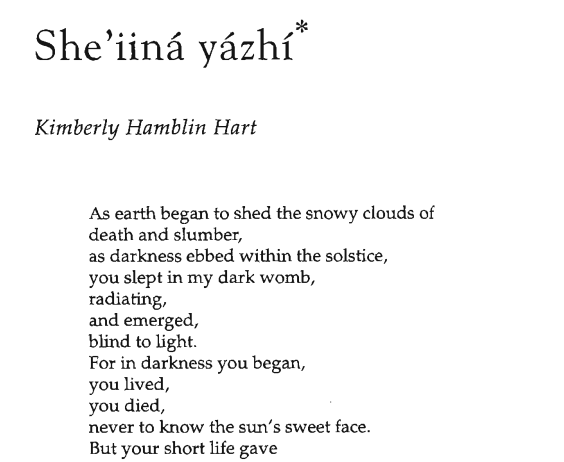
As earth began to shed the snowy clouds of
death and slumber,
as darkness ebbed within the solstice,
you slept in my dark womb,
In Lewis Horne’s short story, “The People Who Were Not There,” the young Mormon protagonist looks at the notebook of Clifford Wellington, an Indian boy from a local reservation, and declares, “The pages gave off…
The corridors buzzed with all the chatter and anticipation of a courtroom before a major trial. At five after eleven, packs of people scurried to their seats looking greedily toward the stand. The chapel bulged.…
He disengaged the gear, ground the key forward. The motor clicked. The steerage went heavy in his hands. He pushed the signal bar upward with his palm, crossed lanes. “What is it?” she asked. “Nothing,”…
On 15 June 1844 Joseph Smith recorded in his journal that “[the steam boat] Maid of Iowa come [sic] down the river about 2 or 3 o’clock While I was examining Benj[amin] Wests painting of…
The portion of 1 John 5:7-8 highlighted in bold has long given biblical scholars pause for thought. Not just modern, “secular,” or “liberal” scholars, either. A physics professor of mine once told his students that Sir Isaac Newton, whose formulation of the laws of gravity still form the fundamentals of physics, actually wrote four times as many books on theology as he did on science.
Any discussion of Mormon culture or doctrine in the work of nationally prominent American poet May Swenson must begin with the caveat that Swenson, for virtually all of her adult life, was not a believing…
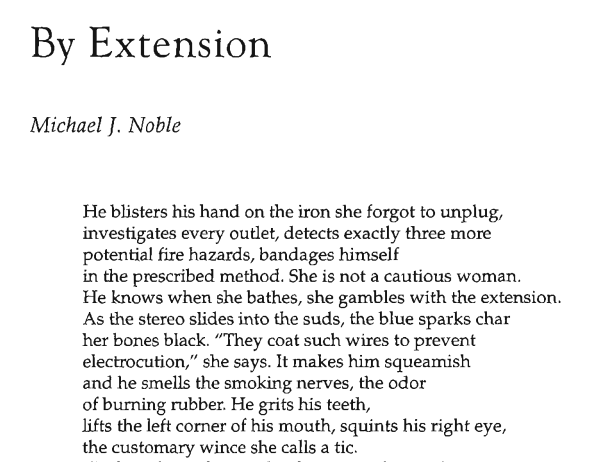
He blisters his hand on the iron she forgot to unplug,
investigates every outlet, detects exactly three more
potential fire hazards, bandages himself
in the prescribed method. She is not a cautious woman.
Let me begin with two statements from a man who 350 years ago struggled to live a life of faith. An eminent mathematician, Blaise Pascal was also a philosopher and religious thinker who knew both the value of rigorous analysis and the limitations of reason. The first quotation, from his Pensees, is his famous theistic wager: