I Can Wait For
April 14, 2018I purposely forget what you look like
so each time I see you I am surprised
again by your beauty. Your name is the
charm I offer nervous cats instead of


I purposely forget what you look like
so each time I see you I am surprised
again by your beauty. Your name is the
charm I offer nervous cats instead of
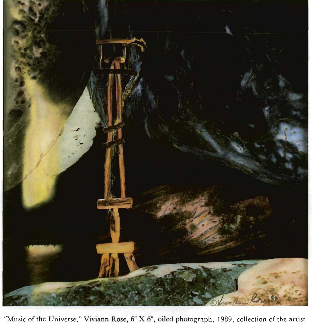
On 24 September 1977, a group of fifteen Latter-day Saint women met for a luncheon at the home of Anna Taylor in Orem, Utah. The group, including Taylor’s sister-in-law Fern Smoot Taylor, Wanda Scott, Florence…
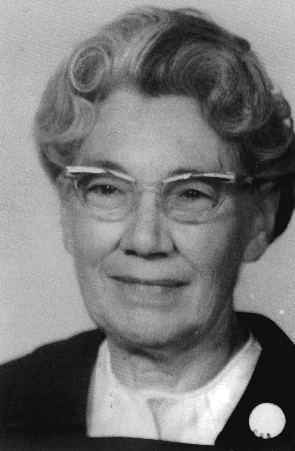
When a third big kettle of beets boiled over, I stared at the bloody mess and asked myself if this were mere happenstance. Perhaps here was a Freudian slip trying to tell me something. Perhaps I had better sort out a few feelings, the one uppermost being: When is enough, enough? I also wondered if I am a solitary case, or whether other women find themselves in a similar bind.
Helen Candland Stark, born of hardy pioneer Utah stock, was a thriving transplant in Delaware for most of her adult life with her husband, Henry Stark, a research chemist. Adoptive parents of three, they nurtured the Delaware Branch from its ecclesiastical preexistence until it became the Delaware Stake in 1974, only five years after they moved back to Utah. Many-roled, Helen has been teacher, actress, wife, mother, writer, environmentalist, and feminist, all interpreted in her own distinctive style. Now, almost eighty-nine and widowed by Henry’s death in 1988, she is a survivor of resilient spirit. In 1989, a DIALOGUE team of interviewers, Shirley Paxman and Belle Cluff, using questions composed by Ann Fletcher, conducted an oral history session which Helen herself edited and supplemented with the assistance of Wanda Scott, who transcribed tapes and typed many earlier drafts.
The writers of these books, with painstaking research, have produced studies that may help the present generation understand American history and culture just as Perry Miller and Henry Nash Smith aided understanding a generation ago. …
Linda Sillitoe is a powerful wielder of the story writer’s craft. In the stories at hand, her plots are organic, her sentences are flexible and lucid, and her metaphors convey a kinetic motion. Over and…
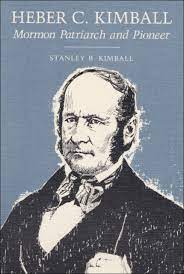
A clergyman visiting Salt Lake City was invited to the Tabernacle where Heber C. Kimball addressed the congregation. The minister was so disturbed by Kimball’s impish and impious ways that had his own family been…
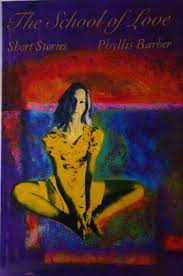
Disparate voices of contemporary short story writers, among them Alice Munro, Margaret Atwood, Raymond Carver, Louise Erdrich, and even Mormon author Linda Sillitoe, all use external situations to probe the inner life of characters. All…
After your letter, I hoped to translate,
if I could, apples and bread into dark open streets.
That girl in Heidelberg drew a black line,
white paper against the shed door,
Three of them are older. None
Grew bold enough in tone and manner
To carry her executive airs.