Zina’s Version
April 25, 2018Zina thought: Ha, what now? She peered through her front door window at the old man crossing Lizzy’s backyard. He was skinny as a bunch of sticks, splotchy, and wrinkled as a raisin. His hair…


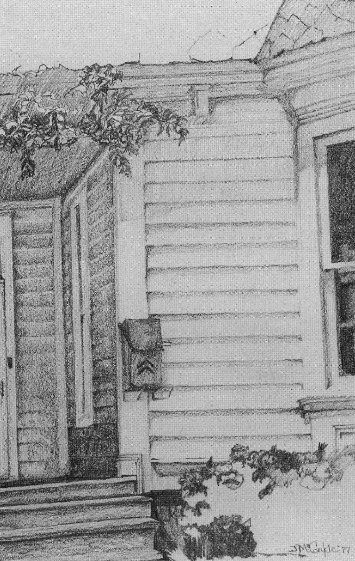
Zina thought: Ha, what now? She peered through her front door window at the old man crossing Lizzy’s backyard. He was skinny as a bunch of sticks, splotchy, and wrinkled as a raisin. His hair…
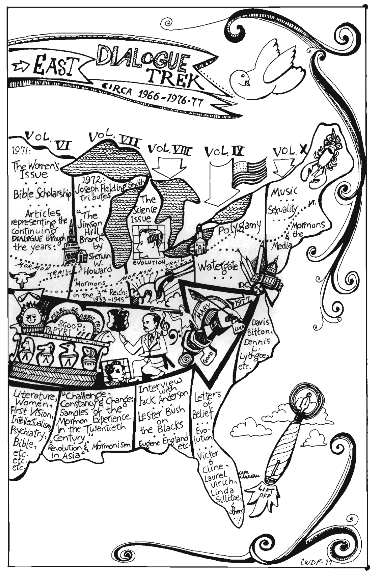
Dialogue 11.1 (Spring 1978): 58–76
During the spring of 1977, Utah’s two major newspapers began their coverage of what was to become one of the hottest political controversies of the year: the Utah Women’s Conference authorized by the National Commission on the Observance of International Women’s Year and scheduled for June 24-25

I first encountered Thomas F. O’Dea through his book The Mormons which I read with considerable excitement. Here, it seemed to me, was a person professionally concerned with the development and enhancement of the scholarly…
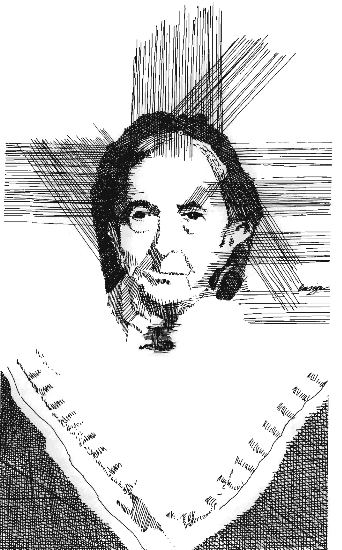
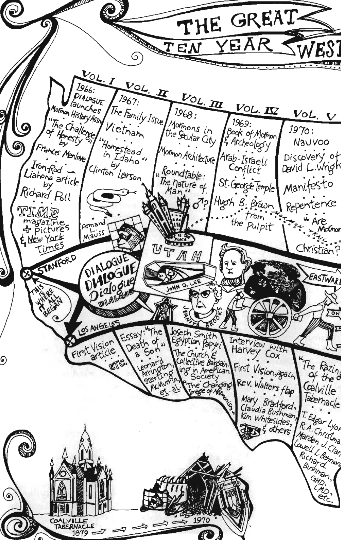
Dialogue 11.1 (Spring 1979): 19–31
Within two years of his assasination, however, the Church was torn by succession struggles that led to dispersion. Almost a century and a half later, the whereabouts of many of these saints is still unknown.

Communication is a matter of infinite hope. It is the emotion we feel when we send these fragile words however tentatively or forcefully out to others. Even those who write secret diaries, shrouded in cryptic codes, or who shout anonymous messages on subway walls, or who carefully hide parchment and golden plates in caves to come forth several millennia later all do so with the same expectation: that someone, somewhere will read and understand.
We looked a lot like the picture in the Dialogue logo, although, of course, we didn’t know it then. Gene and Charlotte England, Karl Keller and I were taking lunch on the lawn at the…
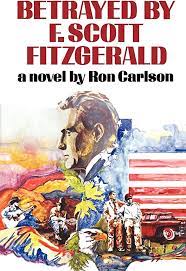
Though set in Salt Lake City, Betrayed by F. Scott Fitzgerald is not a “Mormon novel”, even in the way that Scowcroft’s The Ordeal of Dudley Dean is—which does not mean it will not interest Mormons.…

Wright Morris once said, “The ‘subject’ of Wolfe, Hemingway, and Faulkner, however various the backgrounds, however contrasting the styles, pushed to its extremity, is nostalgia.” He should have included Fitzgerald, and even then the list…
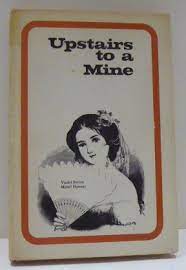
For several decades Bingham, Utah was a turbulent mining town. Built on the edge of the “greatest hole on earth,” its inhabitants slaved for gold and then for copper. One day Bingham disappeared, consumed by…