DiaBLOGue

At Mountain Meadows: For Juanita Brooks

The mass grave here is set with stones 
Piled low inside a low rock wall, 
And marked for travelers by a sign 
That tells us briefly of the murder 
Of six score emigrants, whose bones 
Lay here and there once—on the plain, 
In the gulley—left to the weather 
Of almost a century where they fell— 
Eve

Leaves and fruit were falling 
And I only wanted to know 
Why this, of all the trees, 
Kept alternating greens 
And browns and why it dropped 
Those ugly pods and stems— 
I only wanted to know 
Of the roots, the crazy clutch 
That broke the ground, the branches 

Adam

Let’s see. This morning—since you’ve been gone—
I’ve taken a walk on the beach, naming 
And naming and naming, until I can name no more. 
Comber, anemone, crab. Will these do? 

I talk to myself now—so I’ve found—
As never before, when he’d leave me, often 
Now, and now you. I guess I’ll get used 
To the feeling. But it’s funny—the way I get thinking

The Right Size

A landscape lies under the open sky . . . 
(Open? The sky’s the limit, 
the daylight veil over the illimitable, 
withdrawn for revelation from the darkness 
beyond of Adam’s first—and longest—nightmare 
trying to count quastars telstars from pulstars. 
Nth grandson Blaise, a rodent of nocturnal 

Visit to a Cathedral After a Trip Round the World

In the west door for kings alone swung wide, 
the leather-padded wicket, left behind me 
stifling a gasp, expired. 

No more fresh air: 
I had entered the dim, mouldy, hollow hush 
of a dead church—the silence of the ‘grave 
and reverend’ sirs ghosting it in their gowns—

Hot Weather in Tucson

Glimpsed askance through leaves, the sky 
looks lapis and ivory; 
confronted, blinds and is blinded by 
the sun’s incandescence. 
Through the thick shadow of a mulberry 
a white-wing dove may flute a cool blue call 
continuo; and Christ, 

A Letter from Israel Whiton, 1851

A crest of wind runs and rustles through the pinons 
Below the butte, and it is evening; the moss-green shade
Glimmers with lancets and gems of the afternoon sun; 
The fields beyond glow yellow-gold; and the overcast 
Of azure dims pale and like powder in the air 
Fails away into the recesses of light and time. 
I sit before a candle that tips its flame 
From the door, and I write . . . 

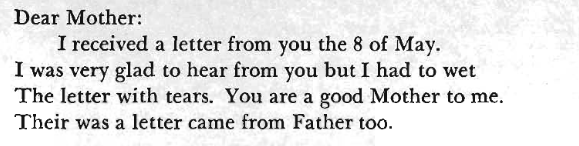
Dear Mother: 
I received a letter from you the 8 of May. 
I was very glad to hear from you but I had to wet 
The letter with tears. You are a good Mother to me. 
Their was a letter came from Father too.

The Redtail Hawk

I remember how icy the alarm clock was that morning when I grabbed it and fumbled under the covers for the button. I didn’t want my mother to hear it and get up too, because…

Literature, Mormon Writers, and the Powers That Be

For the better part of a month, I was with a group of young Mormons bent on giving the Church a vigorous expression in all the arts. We were not very clear as to just what we would do. We would do something. We felt the Church deserved this. It was such a fine Church, everything considered. And it deserved us. Not in its (then) present state, maybe; but we had faith that it could puff up to us. There was the son of an official sculptor, a yearn ing scientist from Alberta, two or three others who do not congeal into iden tities in the twenty-three-year-old mist I am looking into; and there was me, an ink-stained veteran of a year of writing C to C-plus freshman themes at Weber College. We all met near the end of our term at Biarritz American University in the south of France, the winter after one of the wars had ended. 

Virginia Sorensen: A Saving Remnant

Nearly fifteen years have passed since I, in looking around for a thesis topic, began to read “Mormon novels.” It seems odd to remember how electrifying were the “forbidden” Vardis Fisher and others I hadn’t heard of: Scowcroft, Whipple, Robertson, Blanche Cannon, even Samuel Taylor. It must be a clue to our culture that a girl could get through graduate school without such an awakening, especially when many of those writers seem so bland today that I wonder along with Sam Taylor “if most of them weren’t mainly victims of bad timing.” What my awakening really consisted of was a refreshing realization that some of those giants from our past were really human beings after all (“saints by adoption”).