DiaBLOGue

There’s No Such Thing as a Gospel Culture

The Pauline image of the body of Christ provides us with a gorgeous image that every part of the Church as it is expressed through the diverse cultures abroad are vital for its proper functioning. Bonhoeffer enlivens this image by suggesting that “Christ exists as community,”and to my mind there is no one cultural community that is the vital organ for the whole body. Rather, the conditions for a living church are that all of its diverse parts are working, honored, and respected.

Thomas Aquinas Meets Joseph Smith: Toward a Mormon Ethics of Natural Law

In opposition to Christian traditions that teach human guilt as a result of original sin, The Church of Jesus Christ of Latter-day Saints teaches that humans “will be punished for their own sins, and not for Adam’s transgression.”Unlike the Lutheran simul justus et peccator, wherein human beings are thoroughly sinful and saved only by God’s mercy, Mormons believe that human agency is responsible for human sinfulness and that the same agency is required to do good works for which we are ultimately judged.

The Word of Wisdom in Contemporary American Mormonism: Perceptions and Practice

Brigham Young University made headlines in 2012 for a series of controversies that would be, to say the least, unusual on most college campuses: a student-led push for the university to sell caffeinated beverages at student vending locations. Although a staple throughout the United States, caffeinated sodas had long been restricted from sale at BYU due to “lack of demand,” according to university officials.Five years later, however, caffeinated soda was, at last, approved for sale on BYU’s campus.

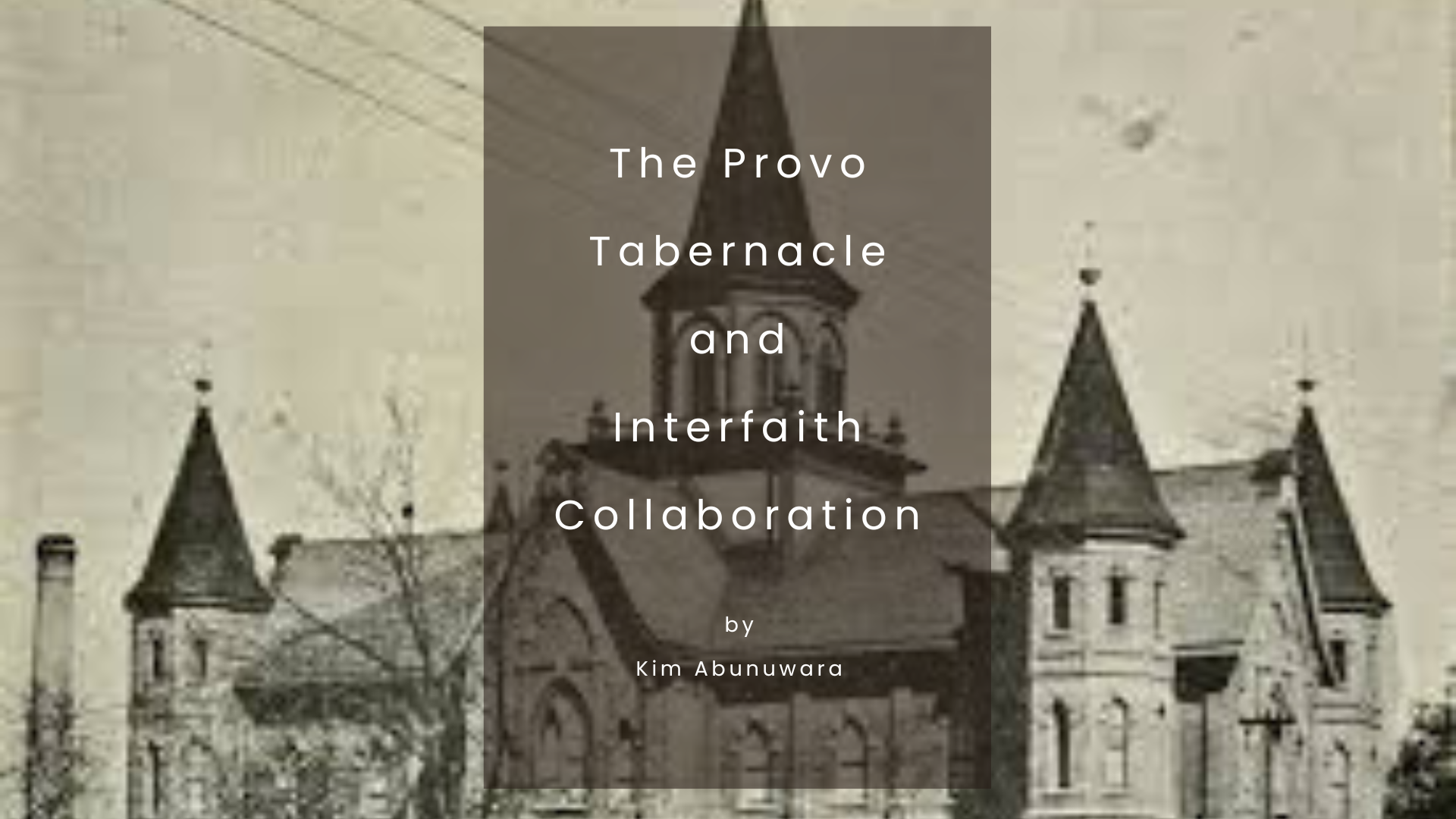
The Provo Tabernacle and Interfaith Collaboration

In October of 1996, Father William Flegge and his St. Francis of Assisi parish in Provo had a problem. Renovations had left their beautiful Spanish Mission–style building unsafe for the high volume of parishioners expected for the upcoming Christmas services. That was when Father Flegge telephoned LDS Church headquarters to ask if Christmas Mass could be held at the Provo Tabernacle. In addition to welcoming Father Flegge and his flock to the tabernacle, LDS leaders invited them to bring into the tabernacle whatever sacred dress, objects, and symbols they needed to realize this important ceremony.Julie Boerio-Goates, pastoral coordinator for the parish, had plenty of experience staging Mass in the three-hundred-seat St. Francis building but was nervous about staging it in the two-thousand-seat tabernacle. The parish moved a lot of materials necessary for Christmas Mass from the St. Francis church, but since the tabernacle was so much bigger than St. Francis, more set dressing was needed. Serendipitously, seminarian Patrick Elliot had just been assigned to the parish as an assistant. Elliot had a good eye and knew where to find additional decorations. On December 24, two Christmas Masses were held in the evening and one at midnight.These services provide a vivid illustration of the Provo Tabernacle’s use for interfaith cooperation. 

Mormons Probably Aren’t Materialists

My mission was a complicated time for me. I was a Harvard undergradu ate, newly theist but uncertainly Mormon, and I was living in southern Louisiana. I’d been a strident atheist for years before a conversion at age eighteen, and I’d managed to keep myself separated from much of folk Mormon belief, even as my family and I had been supported by wonderful Mormon folk in 1980s Davis County, Utah. I was finding my way to faith in the miserable, wet poverty of southern Louisiana, but it was a faith inflected by my lifelong skepticism and general readerliness.

Can Mormons be White in America?

The emerging field of whiteness studies in the US asks some provocative questions: How do outsiders lay claim to citizenship? How do minorities shed their image as un-American? How do they, in other words, become white, with all the economic, political, and social privileges associated with that status?

Authority and Priesthood in the LDS Church, Part 2: Ordinances, Quorums, Nonpriesthood Authority, Presiding, Priestesses, and Priesthood Bans

Dialogue 51.1 (Spring 2018): 167–180
In the prequel to this article, I discussed in general contours the dual nature of authority—individual and institutional—and how the modern LDS concept of priesthood differs significantly from the ancient version in that it has become an abstract form of authority that can be “held” (or withheld, as the case might be).

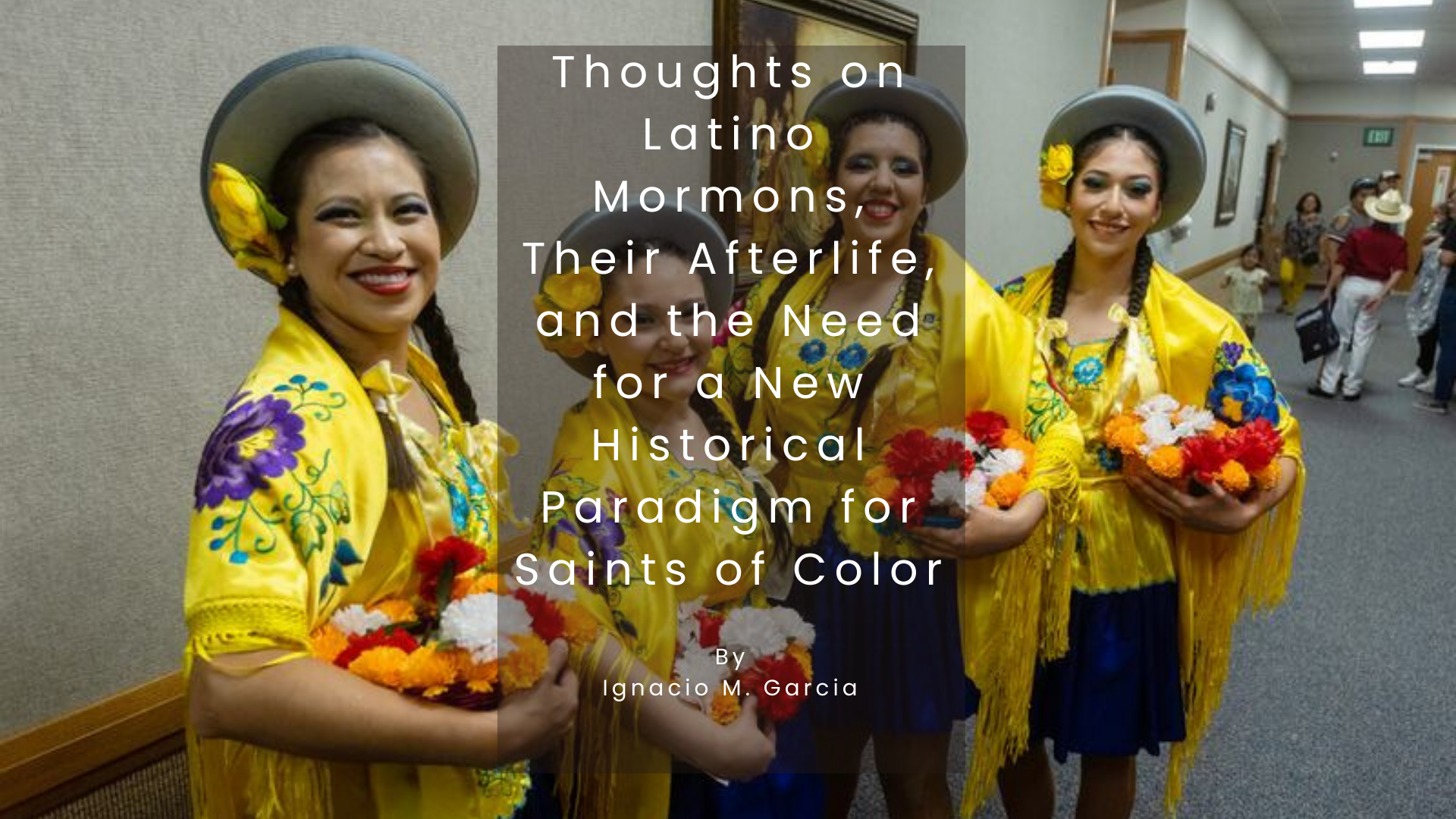
Thoughts on Latino Mormons, Their Afterlife, and the Need for a New Historical Paradigm for Saints of Color

The following thoughts come from my experience as a faithful and ortho dox Latter-day Saint, as a Mormon bishop, as a critic of some aspects of institutionalized Mormonism, and as an activist and scholar of faith navigating what is and has been for most of my life a complicated environment where racial/ethnic issues are ever present but rarely discussed in ways that bring closure. My particular scholarship and activism on behalf of Mexicans and Latinos is encapsulated within this setting and I admit that I have not been freed from the complication that it brings to my faith except for those moments when I immerse myself in those Latino Mormon spaces that are my Spanish-language barrios (wards).

“Infected With Doubt”: An Empirical Overview of Belief and Non-Belief in Contemporary American Mormonism

Daniel, twenty-eight, is an active Church member and temple worker who served a mission and now holds a calling as a young single adult representative for his stake. He says he has both seen and performed miracles, and has a strong belief in Jesus Christ. But he has also struggled at times with doubt, which he says has “come along in many different forms” throughout his adult life.