Three Sealings
October 26, 2018My mother made spiral-bound books for the first few of her nine children: pastel-colored accounts (which she wrote, illustrated, and laminated) of how we had made our way from the spiritual realm to the mortal;…


My mother made spiral-bound books for the first few of her nine children: pastel-colored accounts (which she wrote, illustrated, and laminated) of how we had made our way from the spiritual realm to the mortal;…
Over the last few decades, universities have become the home of contemporary poetry in the United States, where nearly every major poet is also an academic. Poets, like other professors, teach classes, publish in tiered journals, sit on committees, undergo tenure review, secure grants, win prizes, attend conferences, and oversee graduate students. The result is that poetry, whatever else may be said of it, is a recognized industry of intellectual activity within university culture. It constitutes an academic discourse not unlike history or sociology.

At 7 a.m. on a Monday morning, I talked with Death on a mountain.
It’s hardly a mountain. It’s barely a hill.
I’m writing this, and so I can call it a mountain if I want. Besides, I’m from Wichita, Kansas; a sudden forty-foot-elevation hill is a genuine geographic landmark.
The years following the return of the Jewish captives from Babylon were filled with tension. While literal walls were being built around Jerusalem to keep the city safe, pious Jewish leaders were constructing religious walls around the Jewish faith to ensure that YHWH would never again become angry enough to allow his holy city to be destroyed. It was during this period that an unknown author, known later as “Malachi,” produced the final book of the Nevi’im or “Prophets.”
In 2015, the Catholic Church celebrated the fiftieth anniversary of its landmark proclamation Nostra aetate. As one of the key documents of the Second Vatican Council, Nostra aetate laid the foundation for contemporary Catholic interreligious engagement. Promulgated by Pope Paul VI, the document opened up multiple pathways to dialogue and identified the theological parameters within which these dialogues and collaborative projects could be undertaken.
Dialogue 50.3 (Fall 2017): 89–115
I thus argue that Mormonism exists wherever there is belief in the Book of Mormon, even though many adherents reject the term “Mormonism” to distance themselves from the LDS Church headquartered in Salt Lake City.
My grandfather was a medicine man, a practitioner of a ceremony called the Blessingway—Hozhoojii. The Blessingway is described as the foundation of Navajo spirituality, the “scriptures” if you will. This ceremony informs and organizes the spiritual life and community of the Navajo people. Singers, or medicine men, perform this ceremony in times of both joy and sadness. It re-affirms one’s status as a child of “eternal goodness and beauty” and the capacity for one to become “eternal goodness and beauty” themselves. It is the organizing force of Navajo.
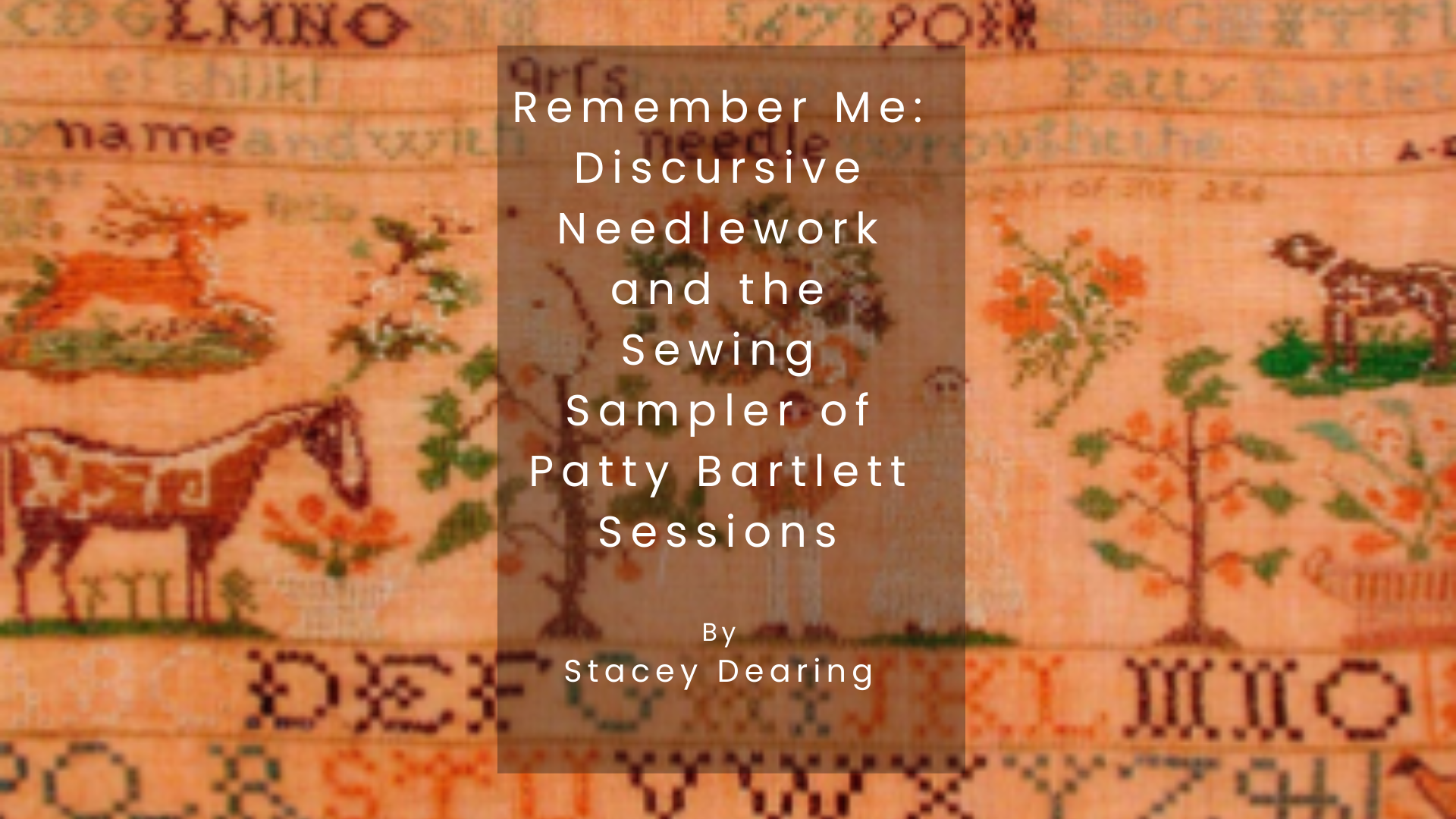
In her diary entry for March 20, 1848, Patty Bartlett Sessions (1795–1892) recorded an unusual note: she had begun to work on her sewing sampler, an item she had not touched for thirty-eight years. She writes simply, “commenced to finish my sampler that I began when I was a girl and went to school.”
One of the happy surprises that makes history so interesting is the fact that Utah ever became Mormon Country, for during the roughly one hundred years before 1847 it had been, if anything, Catholic Country. Catholic explorers, soldiers, fur trappers, and traders had repeatedly plied their trades back and forth through the territory. Brigham Young University historian Ted J. Warner offers an intriguing speculation as to what might have happened if the Franciscan friars Dominguez and Escalante had been able to fulfill their promise to the Indians at Utah Lake that they would return and establish a mission among them.
As an offering in speculative theology, this paper reconsiders the current normative understanding of a male-only priesthood as presented in the Book of Mormon, specifically in Alma 13:1–20, and proposes that Alma presents a more capacious model. While this text is generally accepted as supporting the establishment and practice of a male-only priesthood (and a model of the Melchizedek Priesthood), I argue that Alma’s message was meant to expand the role of priesthood in society and to provide a way for an entire community to enter into a life of holiness.The exegesis that this paper presents is not simply an attempt to bring women into the conversation but to expand the conversation for the entire community—the community of all believers: men, women, and the rest of us.